.png)




2024 was the year of experimentation. 2025 was the year of acceleration and exhaustion. But 2026 will be the year marketing finally stops reacting and starts deciding:
Deciding what authenticity means in a world polished by algorithms.
Deciding where AI accelerates value and where it quietly erodes it.
Deciding what brand stands for when content becomes infinite.
And deciding, perhaps most importantly, what the marketing profession is becoming.
After working closely with CMOs, founders, and GTM leaders throughout the past two years, three shifts stand out as the ones that will shape our industry in 2026.
1. Executive-led marketing becomes a strategic imperative
For years, brands relied on polished campaigns, controlled messaging, and corporate-safe narratives.
That era is ending.
Declining trust in traditional communications, rising expectations for transparency, and the collapse of organic reach are pushing brands to humanize themselves, fast.
This is why executive-led marketing will become a central growth engine in 2026.
A growing body of research shows that audiences trust executives more than brands: Edelman continues to report a widening trust gap, while LinkedIn data shows that content published by leaders earns substantially higher engagement (3-5× times more) than content published by company pages.
The shift is structural.
Buyers want to learn from the people who shape decisions, not from the teams that package them.
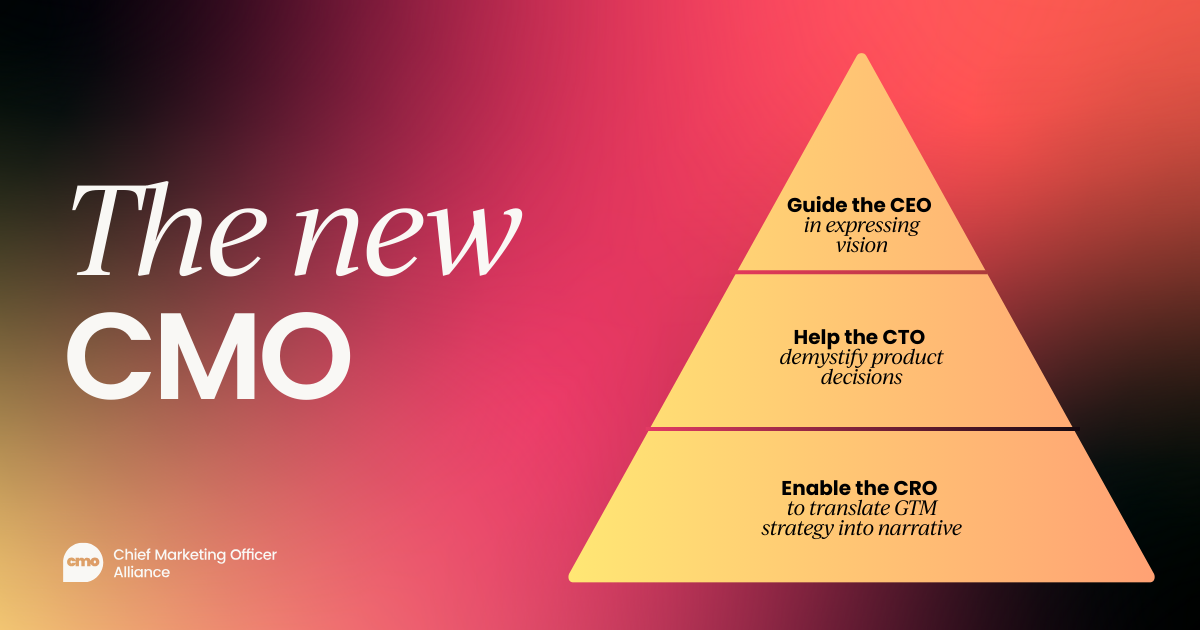
CMOs will increasingly operate as executive coaches, guiding CEOs in expressing vision, helping CTOs demystify product decisions, enabling CROs to translate GTM strategy into narrative, and distributing influence across the leadership team instead of concentrating it in a single “brand voice.”
This is not personal branding for show. It is a reallocation of trust, one that creates a strategic moat performance channels cannot replicate.
2. AI evolves from a toolset into a GTM operating system
The past two years have been defined by tools: ChatGPT, Gemini, Claude, Midjourney, Perplexity, with new ones appearing almost weekly. Marketers experimented with everything. But adopting tools is not the same as transforming operations.
In 2026, AI shifts from a productivity booster to the infrastructure of the modern go-to-market engine.
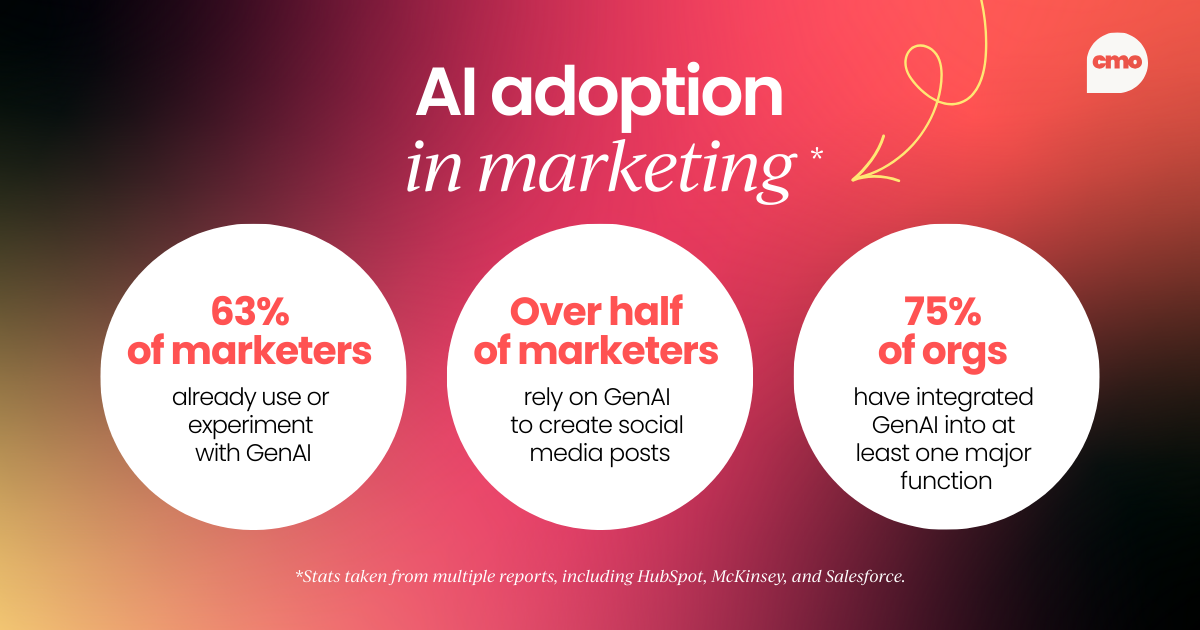
Industry research shows that marketing is becoming one of the fastest adopters of GenAI. Salesforce reports that 63% of marketers already use or experiment with GenAI, and SEO.com finds the same share using it to optimize web and social content.
HubSpot similarly shows that over half of marketers rely on GenAI to create social media posts. At the enterprise level, McKinsey notes that 75% of organizations have integrated GenAI into at least one major function, most often marketing, sales, and product.
As AI centralizes insights and workflows across these functions, the traditional GTM silos begin to dissolve, giving way to a more unified and efficient operating model.
This evolution forces companies to confront a new operational question:
Where does the marketer end, and where does the AI begin?
This should be treated not as a philosophical exercise, but as a practical one.
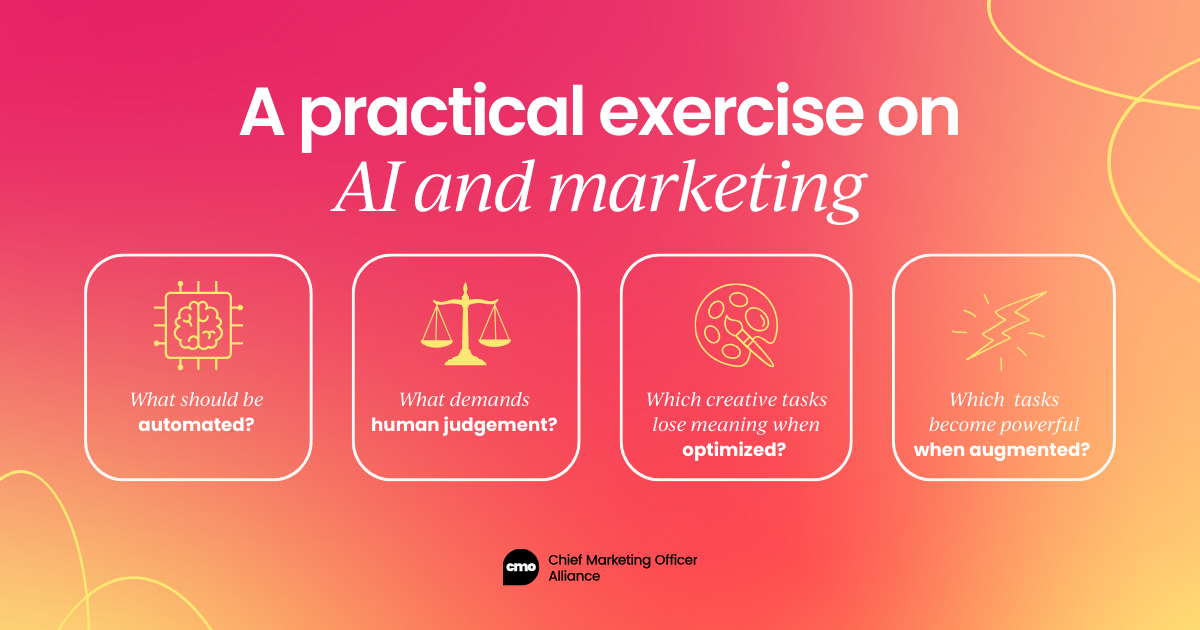
What should be automated? What demands human judgment? Which creative tasks lose meaning when optimized? Which becomes more powerful when augmented?
This tension, between acceleration and intention, is what will define the year ahead.
AI-less Tuesday: Protecting the muscles AI can’t replace
Borrowing inspiration from Meatless Monday, which helped millions improve their health with a simple weekly boundary, some marketing teams are adopting a practice designed to protect a different kind of health, creative health.
“AI-less Tuesday” is a weekly ritual where teams pause all generative support. No AI drafts, no AI optimization, no AI ideation.
Just thinking and writing. Judgment and instinct.
The human muscles that atrophy when they’re never used.
This practice is not anti-AI. It is pro-human.
It sharpens originality, strengthens narrative intuition, and preserves the creative edge that automation quietly erodes.
Whereas AI becomes the backbone of GTM operations, AI-less Tuesday becomes the counterbalance, a reset that makes the rest of the week stronger.
Teams that embrace this duality, disciplined human creativity and high-velocity AI, will outperform those that let automation become the default.
3. Branding returns as the central competitive advantage
Performance dominated the past decade. Then AI accelerated content creation so dramatically that content lost its scarcity and with it, its power.
Gartner predicts that by 2026, 80% of digital content will be AI-generated.When everything becomes infinite, differentiation evaporates.
This is why branding, real branding, becomes the core strategic advantage again.
Not logos, taglines, or refreshes.But brand as emotional architecture.Brand as meaning.Brand as the human signal in a sea of algorithmically optimized sameness.
Audiences will gravitate toward anything that feels handcrafted, imperfect, emotionally charged, or culturally honest. The brands willing to introduce friction, tension, surprise, conviction, vulnerability - will cut through, while those that embrace AI-polished safety will fade into homogeneity.
CMOs will need to make deliberate choices:
- Where should AI scale the brand?
- Where must the brand intentionally slow down and remain human?
- What stories lose power when automated?
- What stories gain power when amplified?
The companies that learn to toggle between human resonance and machine-scale execution will build the strongest advantage in the next decade.
To wrap up
2026 belongs to human-led, AI-accelerated companies.
Together, these projections reveal a profession undergoing a structural shift.Marketing is expanding beyond its historical role and becoming the operating system that connects leadership, narrative, technology, and emotion.
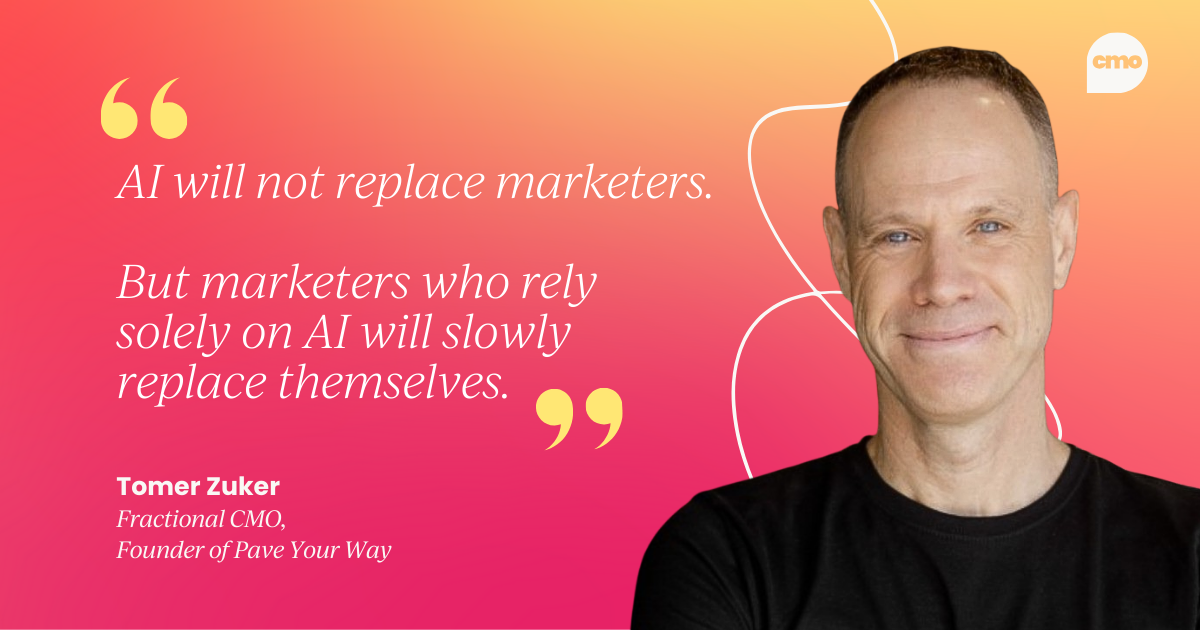
AI will not replace marketers. But marketers who rely solely on AI will slowly replace themselves.
2026 is the moment to sharpen the human craft, master the machine, and design organizations that thrive at the intersection of both.
The future belongs to the companies, and the CMOs, who get this balance right.
Want a clearer picture of where marketing is really heading in 2025?
Our Future of Marketing report cuts through assumptions with real data on budgets, priorities, challenges, and how AI is actually being used by marketers today.
If you’re wondering what your peers are doubling down on, and what they’re shifting away from, it’s all in here.
 Charley Gale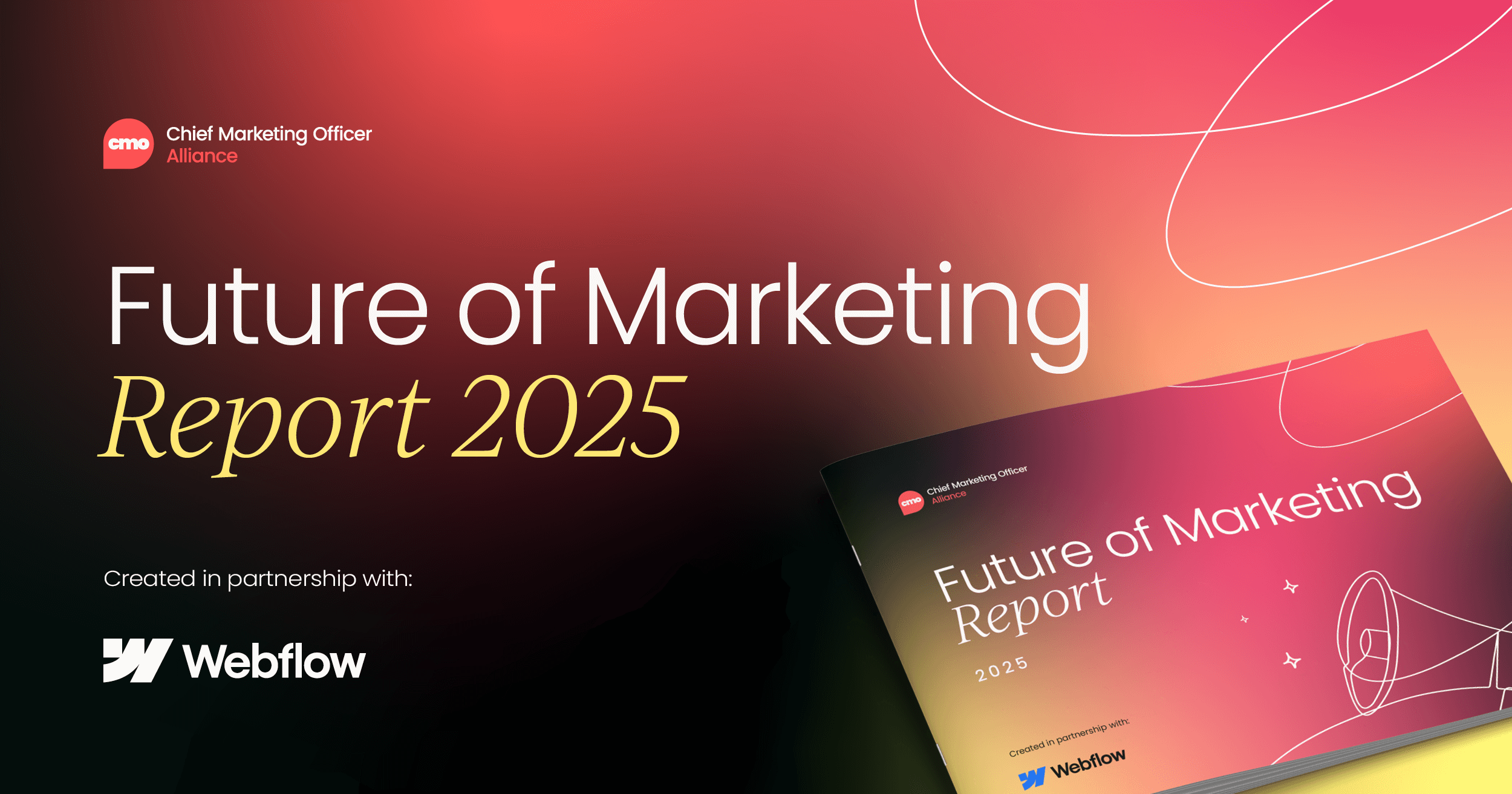


Become a CMO Insider
Thank you for subscribing
Get exclusive insights, frameworks, and strategies from marketing leaders driving real business impact.
An email has been successfully sent to confirm your subscription.
 Follow us on LinkedIn