.png)




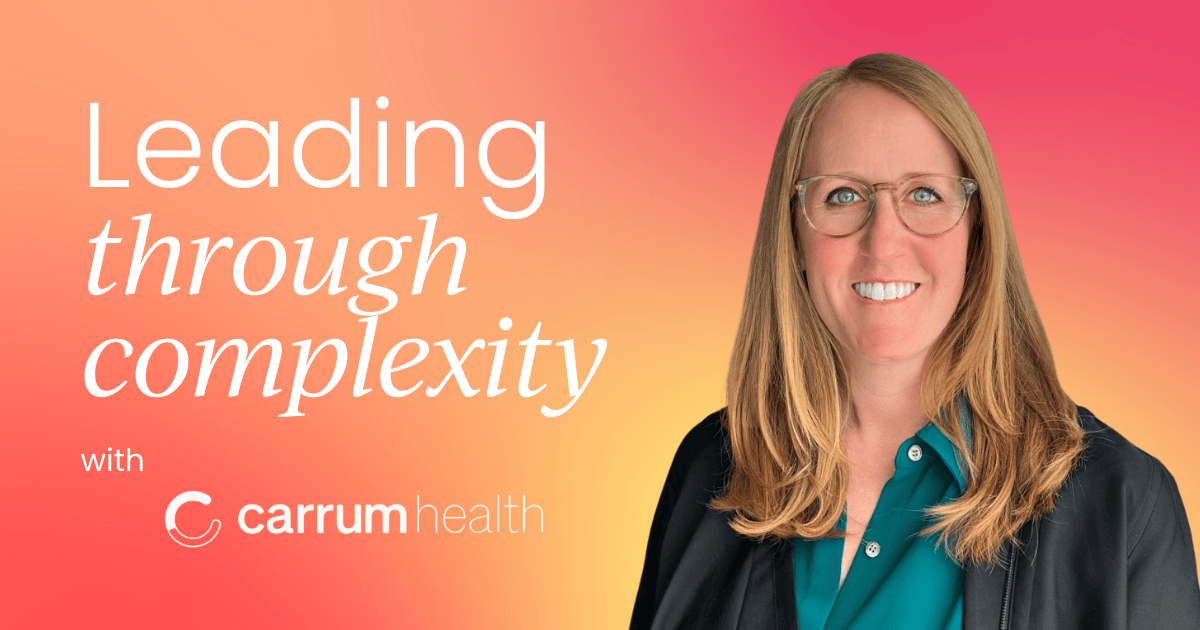
For most of my career, I’ve worked on the business side of healthcare and building engagement strategies in the startup world. It’s a space I’m passionate about, but it’s also one that comes with a unique set of marketing challenges.
So many of our executives are always looking for that silver bullet. That’s probably true for any segment of marketing, but for us, the answer is always the same: the silver bullet is that there is no silver bullet.
Success comes from ongoing, evergreen communications across a number of different channels.
This is especially true in the B2B2C space, a niche world where many of us operate. I even started a community, the B2B2C Collective, because I realized there just wasn't a strong support system for marketers like us. We face similar challenges, from getting clients to open the doors to their employees to structuring our teams and personalizing content at scale.
Here’s my perspective on navigating this complex landscape, from the specifics of healthcare marketing strategy to the leadership principles that empower teams to thrive.
The unique challenge of B2B2C marketing
In a typical B2B market, your audience is more focused. You generally know your buyer’s title and the type of company you’re targeting. With direct-to-consumer, you’re focused on the individual. But B2B2C is a hybrid, and it presents a distinct core challenge.
Here’s what I mean:
Unlocking the keys to the consumer
In the B2B2C space, our primary goal is to gain buy-in and approval from the employer so they will allow us to market directly to all of their end employees. In other words, the employer holds the keys, and we have to convince them to open the doors.
Once they do, the complexity only grows.
Are the employees distributed across the country? Are they sitting at computers all day, or are they frontline workers on a factory floor? The way we grab their attention is completely different depending on the type of employer and employee.
Personalization at a massive scale
You have to consider countless factors: geography, job function, education level, and even health literacy. This is where personalization becomes so important, but you have to figure out how to do it in a scalable way.
You need tools in your toolbox that allow you to speak to these different populations effectively and grab their attention.
It's a far more varied audience than in a typical B2B scenario.
Navigating the complexities of healthcare marketing
Working in the US healthcare market adds another layer of complexity. I always joke that there will always be a startup community in US healthcare because we’ve dug ourselves into such a hole in how our care is delivered and paid for.
At my company, Carrum Health, we’d love for the healthcare system to just operate in the way we’re trying to make it operate. But until then, our job is to provide and democratize access to the highest quality specialty care via their employee benefits while saving both the employer and their employees money.
Translating a whole new language
Healthcare can feel like its own language.
If I just say, "we're your specialty care provider," that might not make sense to the end user. We have to translate what we do into something that resonates with them. At Carrum, we also have significantly expanded our offerings and what specialty care is covered through our network. When we started, we primarily focused on MSK surgical options. Then we added cancer care, and then substance use disorder treatment. This can create positioning and messaging a challenge as it is redefined and/or expanded.
How do you redefine yourself without confusing people?
The name of the game is figuring out what it means for them. How are we saving them money? How are we ensuring they get the best possible care? How are we taking the worry and headache out of the process? What remains central to what isn’t changing about what we’re offering? You almost feel like you have to boil the ocean in a single message.
The key is to test what people care about most and focus on what is core to what you’re providing to these individuals. For us, it’s that at the end of the day, you can trust you’re getting the best possible care while saving you money out of pocket. Cost and quality are what grab their attention.
Meeting patients where they are
People consume information in so many different ways.
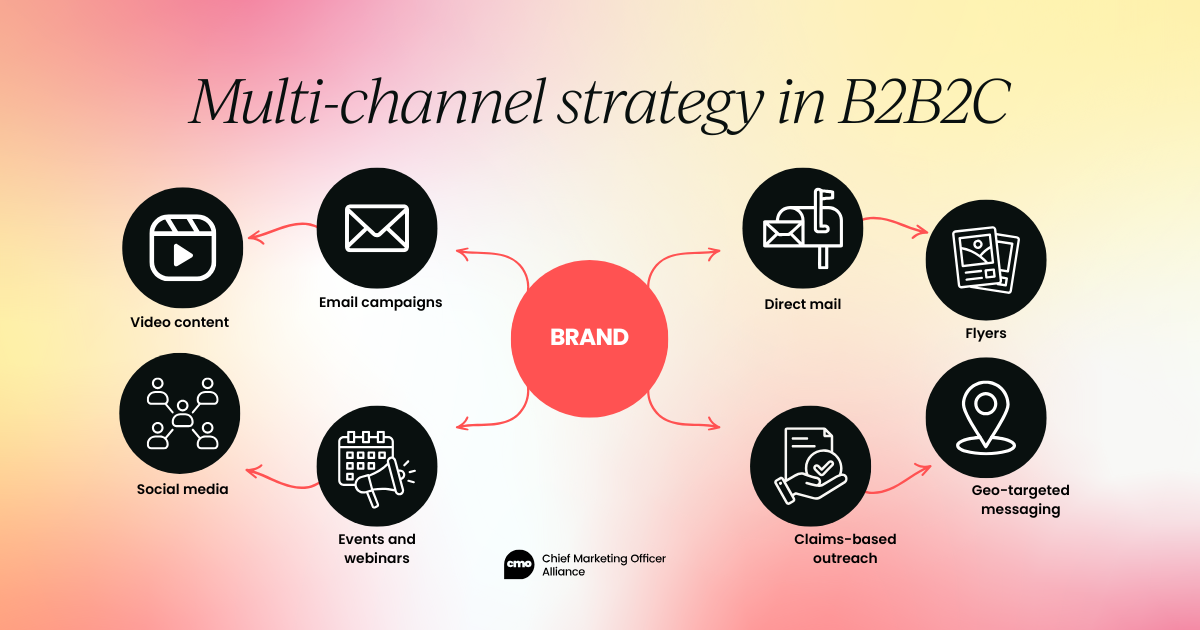
We’re an employer benefit, so some people are highly attuned to their benefits package. Others only pay attention to the quarterly email from HR, while some might see a flyer in the breakroom.
Everyone is at a different stage in their healthcare journey. We can't just rely on one-time launch communications. It has to be an evergreen effort, running throughout the year across different channels.
Building trust for the moment of need
We use broad communications, geo-targeted programs, healthcare claims-based programs, and more to capture people’s attention when it's most relevant. Some people will read an email, while others need a one-minute video to understand the benefit. And some just need to speak to a human.
Today, someone might not need knee surgery. But in six months, something could happen, and they need to remember, "Oh, I have this benefit available to me." That recall is critical. It’s why building trust through content and making your brand recognizable is so important.
When they need you, they have to remember you’re there.
Driving professional growth with curiosity and vulnerability
Beyond strategy, I’m incredibly passionate about professional development. If you’re a marketer feeling plateaued or unsure of your next step, my advice is simple.
The power of asking questions
Honestly, just start asking questions.
Ask them of yourself to figure out what you’re interested in. Then, ask them of people you admire or whose jobs pique your interest. Set up time to learn, without the intention of getting a job offer right now. The goal is to figure out what that next role could even be.
I always say that my 20s were for figuring out what I didn't want to do. My 30s were about focusing on what I do want to do. It’s all about greeting everything in life with an open mind.
Embracing vulnerability as a leadership superpower
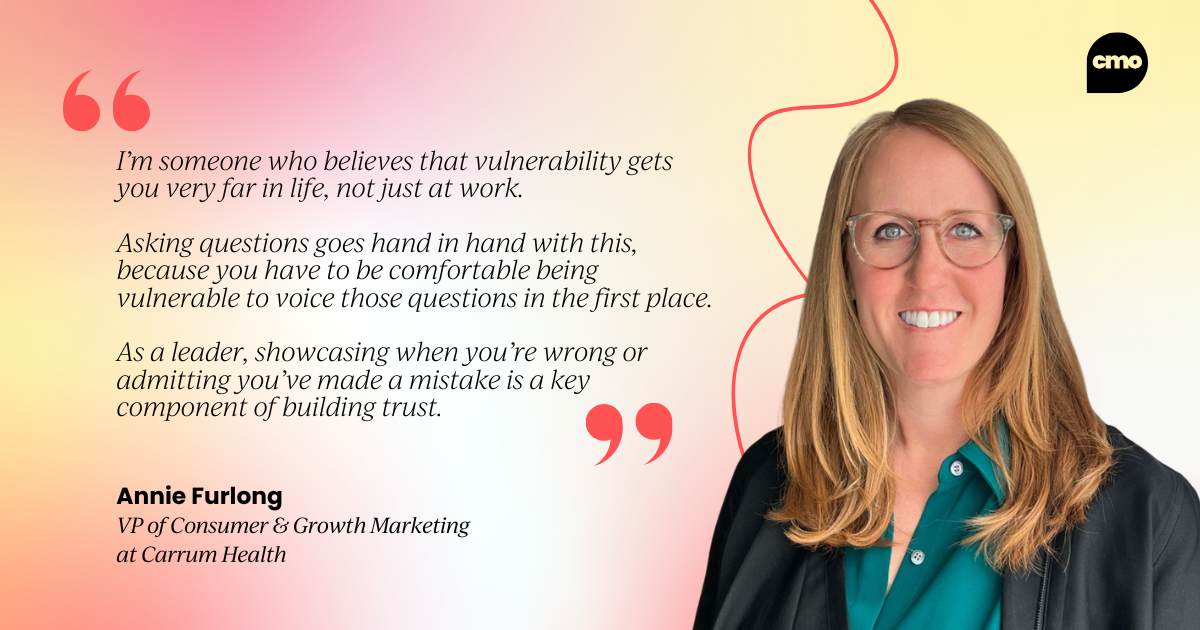
I’m someone who believes that vulnerability gets you very far in life, not just at work. Asking questions goes hand in hand with this, because you have to be comfortable being vulnerable to voice those questions in the first place.
As a leader, showcasing when you’re wrong or admitting you’ve made a mistake is a key component of building trust.
No one wants an infallible leader who just directs things. They want someone who shows that it's okay to be wrong. This is why startups appeal to me; there is no "this is how we've always done it," because it's never been done before.
What vulnerability looks like in practice
So, what does vulnerability mean in practice? It’s being willing to show that you don’t know the answer, or even the whole answer, and being comfortable with that. It’s about creating a culture where people aren’t afraid to speak up or ask a "dumb question."
I remember sitting in meetings early in my career, kicking myself for not speaking up with an idea, only to hear someone else say it and get praise. That happened enough times that I realized I just had to take the risk. Your idea might not be the best one, or only part of it might be great, but no one will know if you don’t put yourself out there.
Building confidence like a muscle
Speaking up is like a muscle.
The more you do it, the more comfortable you become. You start to realize that taking that risk isn't so scary. And if you do get a horrific or disrespectful response? That’s a good sign that it might not be the right team, leader, or company culture for you.
A practical approach to AI in complex marketing environments
In many ways, AI sits at the intersection of all the challenges we face in B2B2C and healthcare marketing. When your audience is fragmented, your access depends on employers, and your work is rooted in trust, there is no shortcut technology can magically solve. AI becomes another place where curiosity, clarity, and thoughtful leadership matter more than speed.
I’ll admit I have a bit of skepticism, not about its potential, but about the hype. So many executives are asking, "How can we do AI?" without a clear goal.
Viewing AI as a tool, not a replacement
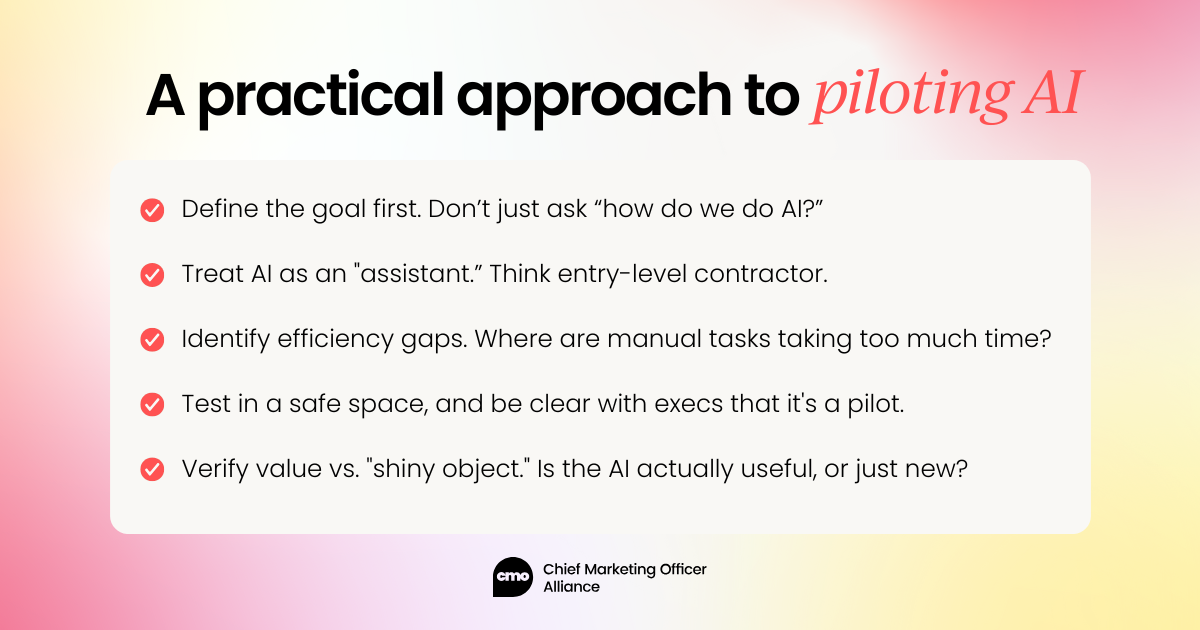
I think of AI as an entry-level contractor on your team. It can be a great assistant, but I don’t see it replacing jobs in marketing, at least not yet. Within marketing, some segments are further along than others. AI for personalizing email subject lines is in a different world than AI for long-form content marketing.
There’s also the issue of security. Many of us can't put proprietary information into a public tool like ChatGPT. Larger organizations might have closed systems, but for many startups, that could be less of an option. These are factors people often overlook when they talk about the ease of adopting AI.
The importance of a beginner's mindset
A team member of mine put it perfectly: we need to have a beginner's mindset when it comes to AI. That can be scary, especially for those of us who are further along in our careers. But we have to be willing to test things out.
The goal shouldn't be to run at every shiny object. Instead, think about your priorities. Where could you be more efficient? What manual tasks are taking up too much time? Could your content team use an "entry-level copywriter" to help with simple tasks or A/B testing at scale?
How to identify the right opportunities for AI
The key is to pilot different tools in a safe space.
Be clear with your executive team that you’re testing things out. These tools might not become permanent, but we need to see if they’re even worth it. Are they what they claim to be, or are they just another shiny tool that will sit in the toolbox and provide little value?
Why marketing’s future is bright
What excites me most about being a marketer right now is that our field is always changing.
The core principles remain the same, but the tools, technologies, and channels are constantly evolving. It’s an evergreen challenge that keeps things fun.
I also believe that marketing has more and more clout these days. With new tools, including some AI-powered ones, we can connect the dots and more explicitly prove marketing’s value. In the past, attribution could be difficult to showcase without heavy tech. Now, we can demonstrate not just direct attribution but also influence.
I always remind our clients and internal teams of the marketing rule of seven: people have to see things seven times on average before they act. I joke that this probably applies to buying a pair of sneakers, not choosing a provider for their cancer care journey.
It just goes to show that our work is complex.
But we are finally getting the credit we deserve. That opens up so many opportunities for our teams and proves the value of all the hard work we do every day.


Become a CMO Insider
Thank you for subscribing
Get exclusive insights, frameworks, and strategies from marketing leaders driving real business impact.
An email has been successfully sent to confirm your subscription.
 Follow us on LinkedIn