.png)







Created by:
 Amelia Wilson
Managing a marketing team means knowing who can do what – and where the gaps are. This marketing skills matrix template helps you map your team's capabilities, spot skill shortages before they become problems, and make smarter decisions about training, hiring, and succession planning.
What is a marketing skills matrix template?
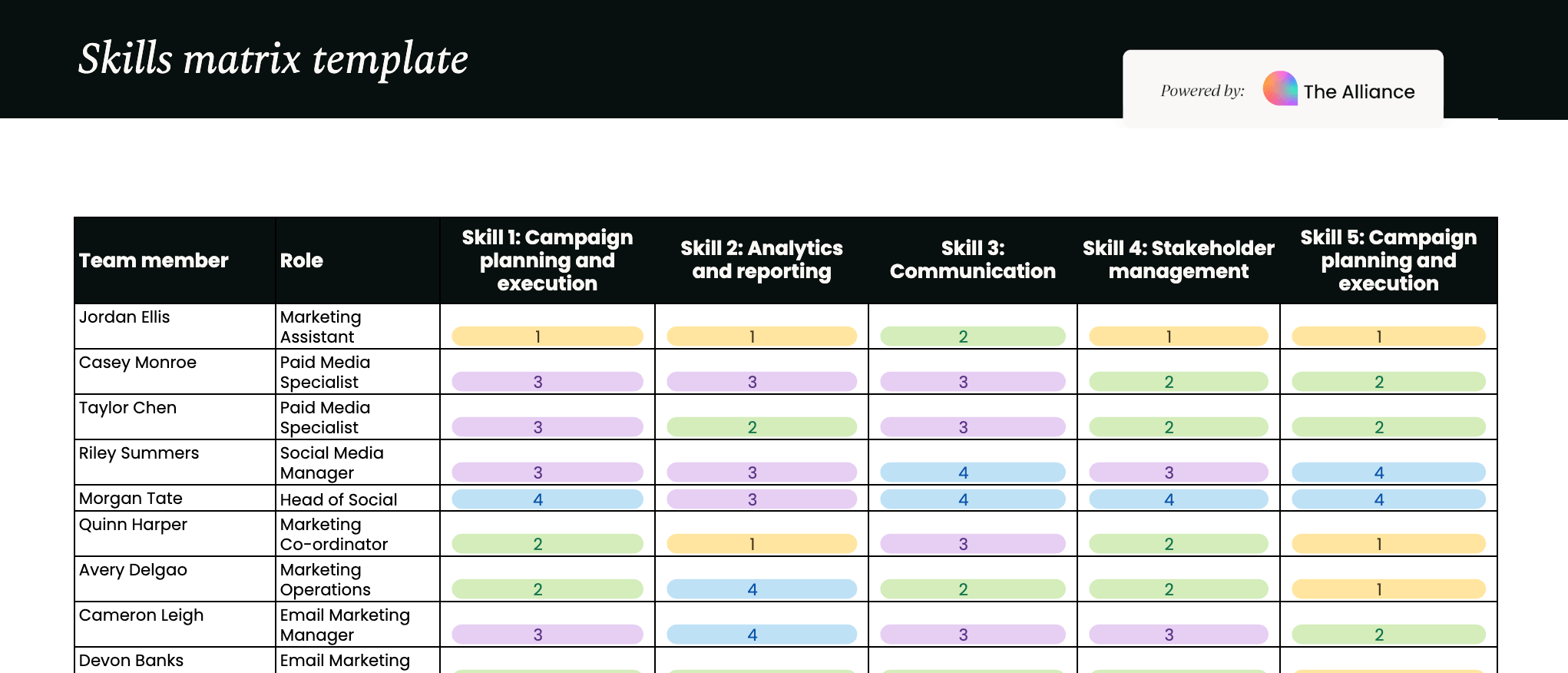
A marketing skills matrix is a visual tool that captures the proficiency level of each team member across key marketing skills. Think of it as a snapshot of your team's collective capabilities. It uses a simple rating scale to assess how skilled each person is in areas like campaign planning, analytics, stakeholder management, or channel-specific expertise.
The beauty of a skills matrix is that it turns something intangible – your team's knowledge and experience – into something you can actually see and work with. You'll quickly spot where you're strong, where you're vulnerable, and where you need to invest in development.
Who is it for?
This template is designed for marketing leaders who want to:
- Understand their team's current capabilities and identify skill gaps that could impact upcoming projects or campaigns
- Make informed decisions about hiring and resource allocation by knowing exactly what skills you have in-house versus what you need to bring in
- Plan professional development that's targeted and strategic, rather than scattershot
- Prepare for succession risks by identifying single points of failure – those critical skills that only one person on your team possesses
- Support performance conversations with clear, objective assessments of where team members excel and where they could grow
Whether you're managing a team of five or fifty, this template gives you a practical way to get organized about skills and development.
How to use the template
Step 1: Define the key skills for your function
Start by identifying the 8–12 skills that matter most for your marketing team's success. These might include things like campaign planning, data analysis, content creation, SEO, paid media management, or stakeholder communication.
Step 2: List your team members
Add each person on your team to the matrix, along with their role. This gives you context when you're reviewing the results later.
Step 3: Assess proficiency levels
Use the 0–4 scale provided in the template to rate each person's current skill level:
0 = No experience or exposure
1 = Basic awareness – can follow instructions but not execute independently
2 = Working knowledge – can complete tasks with some support
3 = Proficient – can perform independently and assist others
4 = Expert – recognized as the go-to person or can teach others
Be honest and consistent in your assessments. You might want to involve team members in self-assessment or gather input from peers to make the ratings more accurate.
Step 4: Highlight critical skills
Identify any skills that are particularly important for upcoming projects, strategic priorities, or business goals. This helps you focus your attention on the areas that matter most right now.
Step 5: Analyze the results
Look for patterns in your completed matrix:
- Where are you consistently weak across the team?
- Are there skills that only one or two people have? (That's a succession risk.)
- Which team members show the most potential for growth?
- Do junior team members have clear paths to develop the skills they need to progress?
Step 6: Take action
Use your insights to create a plan. This might include training programs, mentorship pairings, hiring priorities, project assignments that help people build new skills, or contingency plans for key person dependencies.
Step 7: Review regularly
Skills matrices aren't set-it-and-forget-it documents. Review and update yours quarterly or biannually to track progress, adjust for new priorities, and make sure you're staying ahead of your team's development needs.
Get your marketing skills matrix



Become a CMO Insider
Thank you for subscribing
Get exclusive insights, frameworks, and strategies from marketing leaders driving real business impact.
An email has been successfully sent to confirm your subscription.
 Follow us on LinkedIn