.png)






Created by:
 Amelia Wilson
Working with external partners shouldn't feel like a game of broken telephone. Whether you're briefing an agency, a freelancer, or a vendor, a solid creative brief is what stands between "exactly what we needed" and "not quite what we had in mind."
This template gives you a structured way to communicate your vision, set clear expectations, and get everyone aligned before work begins.
What is a creative brief template?
A creative brief template is a structured document that outlines everything an external partner needs to know to successfully execute a marketing project. It's essentially your project blueprint, covering the what, why, who, and how of the work you're commissioning.
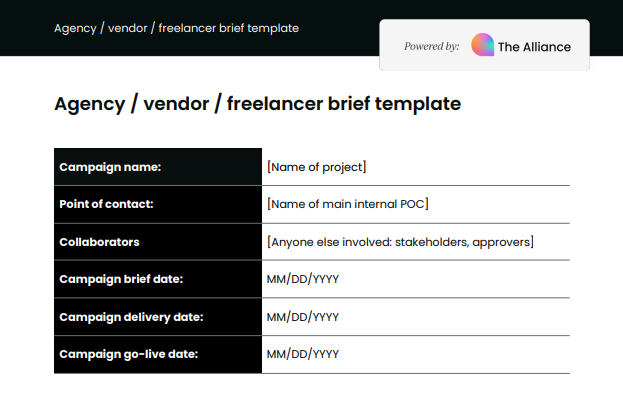
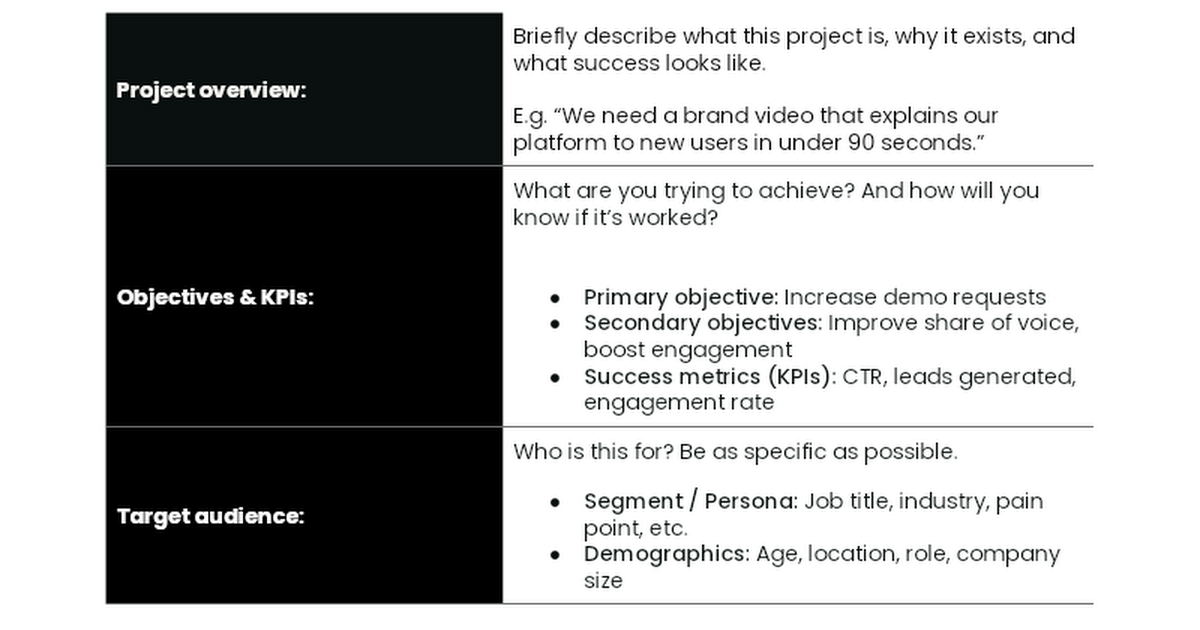
This template walks you through all the critical elements: project objectives, target audience, key messaging, deliverables, timelines, brand guidelines, and approval workflows.
It's designed to eliminate ambiguity and ensure everyone's working from the same playbook. Instead of scattered emails and assumptions, you've got one comprehensive document that answers questions before they're even asked.
Who’s it for?
This template is for marketing leaders and their teams who work with external creative partners – whether that's agencies, freelancers, vendors, or production companies.
You'll find it especially useful if you're:
- Commissioning creative work regularly and want to standardize how you brief projects across your organization
- Managing multiple stakeholders and need a single source of truth that keeps everyone aligned
- Working with new partners who don't yet know your brand, audience, or internal processes
- Experiencing revision fatigue because briefs aren't clear enough the first time around
- Coordinating complex campaigns with multiple deliverables, channels, and tight deadlines
It's also valuable for anyone who needs to justify creative decisions internally. A well-documented brief gives you something to point back to when questions arise about scope, messaging, or why certain choices were made.
How to use the template
Start by downloading the template and customizing it for your specific project. There’s no pressure to fill out every single section if it's not relevant – use what makes sense for your needs.
- Before you start writing: Make sure you're clear on your project's goals and have buy-in from key stakeholders. The brief should reflect decisions you've already made, not be the place where you figure things out for the first time.
- Fill it out thoroughly: The more detail you provide upfront, the fewer rounds of revisions you'll face later. Be specific about your target audience, articulate your core message clearly, and include concrete examples of the tone and style you're after.
- Include the right people: List everyone who needs to be involved in the approval process and set realistic deadlines that account for feedback rounds.
- Share relevant background: Help your partner understand the context. Why does this project matter now? What's worked or not worked in the past? What are competitors doing? This context helps them make smarter creative decisions.
- Be clear about constraints: Don't save the fine print for later. If there are legal requirements, compliance checks, accessibility standards, or specific tools that must be used, call them out upfront.
- Use it as a living document: The brief should be your shared reference point throughout the project. When questions come up or scope discussions happen, go back to the brief to keep everyone grounded in the original objectives.
Once you've completed the brief, walk through it with your external partner before they start work. A quick alignment call can catch misunderstandings early and give them a chance to ask clarifying questions.
Then, keep it handy throughout the project – it's your accountability tool for ensuring the final work delivers on what you originally set out to achieve.
Grab your creative brief template



Become a CMO Insider
Thank you for subscribing
Get exclusive insights, frameworks, and strategies from marketing leaders driving real business impact.
An email has been successfully sent to confirm your subscription.
 Follow us on LinkedIn