.png)




Over the last few months, I've seen hundreds of marketing teams rush to use AI tools. People are using LLM models to make content, running ads on platforms that use AI bidding, and using predictive analytics. The gains in productivity are real. But I keep telling CMOs that we are mixing up efficiency and transformation.
The big change in strategy happening right now is the shift from using AI as a bunch of separate tools to creating integrated AI operating systems that completely change how growth works. Most marketing leaders don't fully understand this yet. This transition is about starting over and building the whole growth engine from scratch.
I'm noticing that early-stage companies and a few forward-thinking businesses are starting to do things very differently. They're not doing campaigns every three months. AI runs everything from finding new opportunities to making creative work to allocating budgets in continuous, self-optimizing growth loops.
Most established businesses are still in the bolt-on phase, and the gap is growing quickly.
CMOs say this is the most important strategic turning point since we all had to figure out how to change to digital ten years ago. What's the difference? This one is going faster, and the penalties for being late are harsher. People who keep thinking in terms of campaigns and channels will be outsmarted by competitors who have built systems that can grow on their own.
It’s clear what you must do: stop just being a marketing manager who runs campaigns. Become a system architect who creates self-driving growth engines.
A different perspective on where most marketing organizations are today
To give you an example of what I’m observing in most marketing organizations, I’ll paint you a picture of where everyone seems to be today.
The content team has recently discovered Claude and ChatGPT and is creating three times more blog posts and social media copy than ever before. Performance marketers are using AI bidding platforms. The analytics team is using predictive models to determine potential customer lifetime value. Sales ops have automated their outreach sequences. And everybody is loving how much more productive they are.
The problem? When I look at the actual workflow, nothing has fundamentally changed.
Marketing gives designers creative briefs, and designers then upload finished assets to advertising platforms that generate performance data for analytics tools. Those advertising platforms generate performance data that flows directly into analytics tools. Analytics produces insights that eventually, typically weeks after the fact, come full circle and inform the next brief.
We’ve simply accelerated each step of this inefficient linear process.
I call this the AI bolt-on phase. And based on what I’m seeing across industries, roughly 80% of companies are stuck here. They’ve simply taken existing processes and slapped AI on top of them. The machine runs faster, but it’s still the same machine.
The tell is simple: if you removed all the AI tools tomorrow, your process would slow down, but it wouldn’t break. Teams could still function. They just wouldn’t be as efficient. That’s the difference between a tool and a system. A system changes the fundamental architecture of how work gets done.
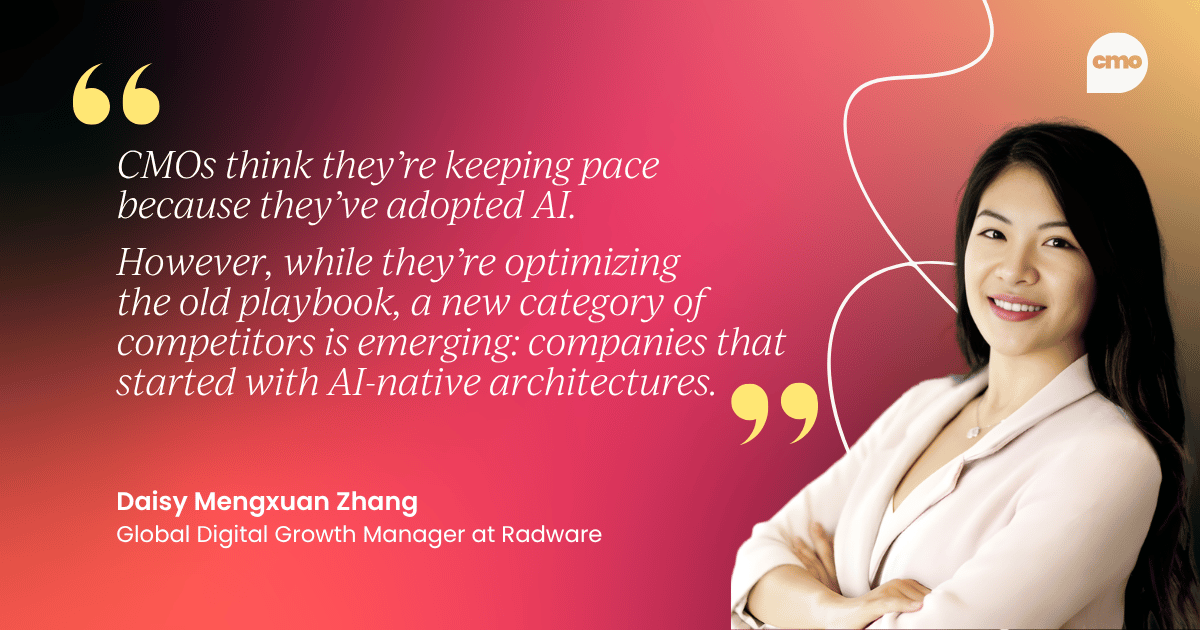
What concerns me is that most CMOs don’t realize this distinction matters competitively. They think they’re keeping pace because they’ve adopted AI. However, while they’re optimizing the old playbook, a new category of competitors is emerging: companies that started with AI-native architectures. These organizations don’t have legacy processes to retrofit. They built integrated growth systems from day one, and they’re moving at a completely different speed.
The performance gap is already visible. I’ve watched AI-native startups identify market opportunities, test responses, and scale what works – all within the same week that traditional companies are still scheduling their planning meetings. The compounding effect of this speed differential is brutal.
What does an AI growth operating system do?
The term “operating system” gets thrown around a lot, so let's make sure we’re clear on what it means.
An operating system doesn't just run tasks; it also organizes them. You set the goal, and it distributes resources, sets priorities for actions, and changes to meet changing needs in real time. That same logic is used by an AI growth operating system for marketing and making money.
You don't buy just one tool. It's a structure, a system that works together across five layers:
1. The data layer
Don't think of this as a warehouse that gets new stock every week – think of it as a place where signals are live.
It takes in behavior from every touchpoint, like visits to the site, product use, email engagement, paid media, and CRM activity, and keeps the context the same. The system connects the dots when a prospect downloads a whitepaper, compares prices, and then talks to a competitor.
Traditional stacks break up that story across different platforms. This model keeps things going.
2. The decisions layer
This is where the change happens. The system doesn't wait for a monthly performance review; it always checks:
- Which accounts are getting hot?
- What creative angle is working in Germany but not in the UK?
- Where is spending money not yielding as much in return?
It doesn't just show dashboards on the surface. It changes the budget, shifts the focus, and changes the priorities within set strategic limits. Decisions go from being planned to being made all the time.
3. The creative layer
Campaigns are no longer fixed assets. The system doesn't just start one idea for six weeks; it makes different versions, tests them on real people, and grows what works. Messaging changes based on how people respond, not on when they are supposed to. Brand and compliance rules stay the same, but iteration happens all the time.
4. The execution layer
This is the backbone of the operation. Centralized coordination of channel deployment, audience segmentation, bidding, email triggers, and website personalization. No more having to sync platforms by hand or having channel silos fight for budget. The system sees execution as one smooth motion.
5. The feedback loop.
Every interaction goes back into the model. Short-term improvements happen right away. Changes to strategy happen every day. Long-term trends shape the bigger picture. The system doesn't just tell you how well you're doing; it also helps you learn more.
Autonomy and adaptability set this apart from a well-integrated martech stack. The layers talk to each other without needing to be passed from one person to another. The system gets better when it gets new information.
And the team's job changes. Leaders set guardrails, goals, and risk thresholds instead of running campaigns. The system takes care of orchestration. People are in charge of where things go.
That's an operating system for AI growth.
Why old growth engines are no longer working
The old growth model isn't just having a hard time; it's falling apart.
In the last three years, the cost of getting new customers has doubled in many SaaS and DTC markets. The usual things to do, like buying ads on Facebook or Google, changing up the creatives, and improving landing pages, don't work anymore. Marketers are all going after the same people, in the same auctions, and with the same tools. The edge we used to get from careful testing and manual optimization is gone.
Platforms now do things that used to take skill. By default, it takes care of bid strategies, targeting audiences, and even rotating ads. A strategy that used to give teams an edge is now a must-have. When all of your competitors have access to the same AI-powered tools, everyone is on the same level.
The clarity of signals is also getting worse. Updates to iOS privacy settings, the end of cookies, and stricter rules have made it harder to see how users behave. Many teams are spending millions on attribution models that they know don't work, and they're having a hard time figuring out which channels are really driving growth.
Timing is the bigger issue. Planning, making, launching, measuring, and changing are all parts of a traditional marketing cycle that can take weeks or months. By the time we review campaigns, the market has undergone significant changes. Customer tastes have changed. Competitors have made moves. Instead of acting on new trends, teams end up reacting to old data.
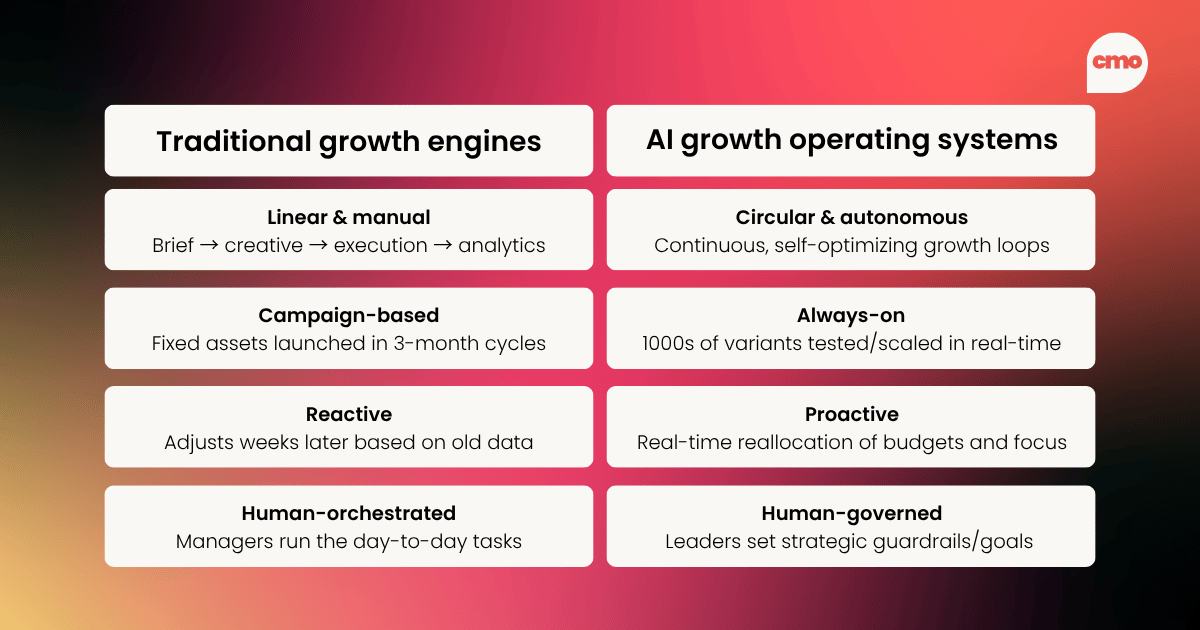
AI-native growth teams work differently. They notice changes in performance within days, make and test new versions almost right away, and change budgets across channels several times a day based on real-time signals. Their experiments are always going on, not just during campaign times.
This speed makes the advantage even bigger. A team that iterates faster doesn't just get things done faster; it also gets more information, gets better at targeting, and gets better at messaging at a faster rate. These learning cycles make a gap that can't be closed by making small improvements to old systems.
To stay ahead of the competition, businesses need to rebuild their growth engine instead of fixing a playbook that isn't working anymore.
The new CMO mandate
Most of us haven't fully grasped how the CMO role is changing yet. I'm seeing it happen right now, and to be honest, a lot of marketing leaders are having a challenging time with the change because it requires skills that we didn't learn in our traditional training or experience.
A successful CMO in the past was someone who was adept at managing teams, leading creative projects, and taking care of brands. You recruited exceptional personnel, selected reputable agencies, wisely allocated budgets, and ensured the quality of work. You thought in terms of campaigns, channels, and plans for the next three months. Your job was to meet growth goals while building brand equity and running marketing well.
That's not the job anymore – it's just part of it.
The system architect mandate adds a whole new level. You now have to come up with integrated growth architectures that work on their own within the strategic limits you set. Most CMOs have never had to know data infrastructure in this way. It means knowing what AI models can and can't do. It means using feedback loops, emergent behaviors, and system design principles to help you think.
Your strategic planning changes from making campaigns to setting system parameters. Instead of deciding how much money each channel should get, you're setting the rules for how the system should judge how well each channel is doing.
- What should it give up in order to grow and be more efficient?
- When should it look for new ways to reach customers, and when should it stick with what works?
- How can it find a balance between short-term sales and long-term brand building?
You make the rules. The system runs inside them.
This has big effects on how teams are set up. The organizational chart that separates people into brand, performance, content, and analytics groups doesn't match how a real integrated growth system works.
I'm seeing new jobs pop up, like growth engineers who build and maintain the technical infrastructure, AI strategists who come up with decision frameworks and optimization logic, prompt architects who come up with creative direction for AI-generated content, and system operators who keep an eye on performance and change settings.
We still need strategic thinkers and creative people, but the work changes. The brand strategist doesn't just come up with positioning anymore. They put it into guardrails that control the content that AI makes. The performance marketer does more than just improve campaigns. They come up with the logic that makes self-optimization possible.
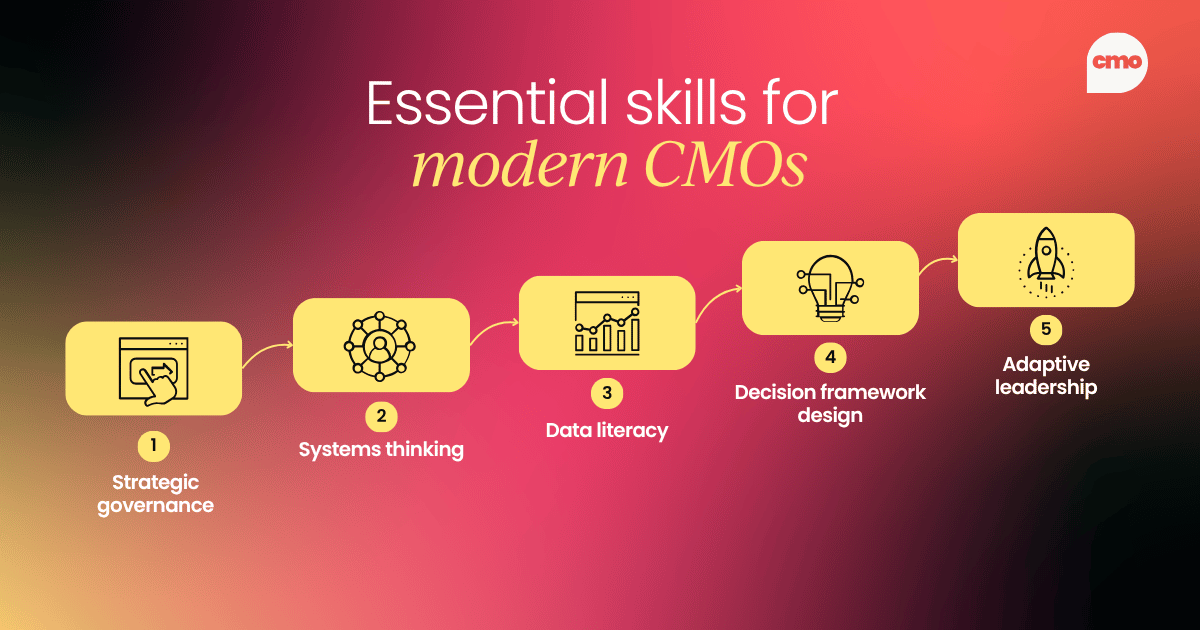
Honestly, the skills that CMOs need now are very different from what they needed in the past. You need to know how to use technology –not necessarily coding skills, but enough knowledge to have smart conversations about what AI systems can and can't do, how data moves through architectures, and where humans add value and where automation works best.
You need to be able to think in systems. Comprehending feedback loops. Recognizing behaviors that come up. Seeing how the parts work together to make the whole system work. This is more like how engineers think than how most marketers were taught to think.
And maybe the hardest part is that you need to lead in a different way. Managing a traditional team meant giving clear orders, keeping track of milestones, and doing performance reviews based on how well they did their jobs. To govern an AI operating system, you have to set a strategic direction while letting it run on its own. That means keeping an eye out for drift or accidents. It means knowing when to step in and when to let the system learn on its own.
To be honest, this type of management makes some CMOs uneasy. Less direct control, more outcomes based on chance than plans set in stone. But you get more speed and scale than any human team could ever match.
How to move from tools to systems
This change will happen over the course of 18 to 36 months for most businesses. It's not ambition that's the problem; it's trying to skip steps. We’ve seen teams jump ahead before they're ready, and it usually costs them time and trust.
Step 1: Teams that use AI
This is where most organizations are today. AI tools can help with content, images, reporting, and optimization, but they work within existing workflows. Things would slow down, but nothing would break if you took them away. AI makes things more productive, but it doesn't change the way things are built.
Stage 2: Workflows that use AI
In this case, tools talk to each other. Creative goes straight into paid media systems. Data on performance goes back into making content. Based on analytics signals, campaigns change on their own. At this point, AI doesn't just speed up workflows; it also changes them.
Step 3: Growth loops that AI controls
The system now takes care of execution. Budgets move between channels based on how well they are doing right now. Creative variants are always being tested and improved. Personalization changes based on real-time behavioral data. People set goals and limits, but the day-to-day work is done with little help.
If most organizations put in the effort, they can reach this point in 24 months.
Stage 4: AI-native operating systems
This is where AI doesn't just do things; it also finds chances. It finds patterns, predicts how people will respond, suggests strategic moves, and, with permission, takes action. This is where competitive advantage builds up, but only a few established companies will get there in less than three years. How? From what we've seen, these are the most important elements:
First, data infrastructure
A smart system needs all the data it works with to operate well.
This is the foundation: customer data platforms, real-time pipelines, and reporting layers. Building these requires considerable expense and time; there are no shortcuts.
Next, the architecture of integration
The APIs, middleware, and context sharing of multiple systems are no longer simply an IT endeavour. Marketing executives must now work with the CTO.
Third, capability decisions
Some AI capabilities should be bought; others, especially those tied to differentiation, should be built. The mistake is thinking everything is strategic or that nothing is.
Lastly, the people
It is nice to have new roles; it is more important to have the right mindset.
The people must understand how to be comfortable with trying new things, with the short-term implications of change, and with giving up control over the operation.
Common pitfalls when building AI-native operating systems
The biggest mistake is trying to build everything at once. That’s the fast track to losing money and destroying morale.
The other major error is buying the technology before you understand the workflows it will help with. The tools won't help you if you don't understand your own strategy. Most companies don’t fully recognize the impact of their people. An AI operating model changes what the people do, how the people do it, and what the people expect. Even the best systems have trouble sticking if you don't pay attention to the people.
Real-world AI scenarios
Finally, real-world examples are good illustrations of what the phrase means in practice. While such case studies are still hard to find because the trend is so new, here are a few examples that walk the reader through the journey.
Salesforce Einstein
Salesforce’s Einstein is one of the best examples of B2B SaaS. They went beyond individual AI capabilities to create a system where predictive capabilities, automation, and AI recommendations all operate as one. AI automation in their marketing capabilities increased net income by $1.5 billion and increased free cash flow by 43%.
The impact here wasn’t just about improving efficiency. Einstein brings together all the different areas of marketing, sales, and customer success to create automated processes where the insights from one system inform actions in another.
A customer service interaction indicating frustration with the product can trigger an automated campaign to retain that customer, update their health score, and alert the account manager, all without any handholding. It’s the entire system working together.
Starbucks DeepBrew
Another example is Starbucks’s DeepBrew, a personalization system within their e-commerce business. It’s another example of a system versus a suite of tools.
They analyse customer behaviors based on mobile application interactions, purchase history, location data, and external influencers such as the weather. So, if a customer typically buys an iced coffee on a warm morning, DeepBrew can automatically push a mobile offer on that product when the temperature hits 75 degrees in the city. This powers the experience of tens of millions of loyalty program members.
The key architecture here is the constant feedback loop. DeepBrew doesn’t operate on pre-programmed rules. It learns what types of offers drive incremental sales versus marketing waste and continuously adjusts the timing and nature of offers made to consumers, continuously modifying its strategy based on the actions most likely to result in incremental purchase activity.
How AI is transforming sales in B2B enterprises
McKinsey identified many transformations in the use of GenAI in sales by B2B enterprises.
For example, one industrial distributor was experiencing slow growth due to inefficient opportunity identification. Sales teams were literally driving through entire cities searching for potential customers, i.e., construction projects.
The distributor developed an AI engine that combined internal and external data to rate and rank potential customers as well as identify new potential customers and direct field sellers' time to those rated highest. The system didn’t simply speed up the way business was conducted; it fundamentally changed how growth would occur.
The two examples provided above have these characteristics in common. They integrate data that had previously been segregated into different areas of the organization. They automate decision-making on a large scale, rather than assist with individual human decisions. They develop continuous learning loops that use past performance to continually refine future execution.
While humans provide the strategic guardrails that guide the systems, the human managers don’t need to intervene in order to manage the systems on a day-to-day basis.
From here to the next three to five years
The next stage is a series of autonomous growth system developments. It's coming faster than most think. Over the next three years, many companies will have developed marketing engines with CMOs providing strategic direction, while AI provides full tactical execution.
From quarterly budgets to 72-hour cycles
Real-time, continuous reallocation of budgets will replace traditional quarterly budgeting. These systems will be able to listen to social media trends, analyse search data, and determine emerging opportunities in the market.
Then, these systems can model the size of those opportunities, create messages, develop tests for initial messaging approaches, allocate funds for testing, run experiments across all necessary channels, measure first response, and grow as needed to maximize ROI – all within a 72-hour cycle, and without needing any approvals other than the strategic boundaries for which activities are permissible.
This isn’t some far-off sci-fi dream. Companies are already building toward this capability.
Designing the creative system rather than the asset
The process of creative production will follow a similar pattern. Instead of bringing in an advertising agency to design a campaign that might have a shelf life of a few weeks, the marketing system will constantly generate, test, and optimize thousands of creative versions across various formats and channels.
The system will understand the brand guidelines, the regulatory environment, and the strategic direction, operating within these constraints while optimizing for better results. The human creative director won’t design the creative assets; they will design the creative system.
Closing the loop between product and marketing
The feedback loops between the product team and the marketing system will close in record time. Customer behavior, support interactions, product use, market feedback, etc., will flow nonstop between the product team and the marketing system.
When the product team releases a new feature, the marketing system will already have tested various positioning options, identified the segments that will likely respond the best, and have personalized marketing campaigns ready to go, because it’s been learning from the beta testers and early adopters the entire time.
The CMO as a system architect
The role of the CMO will likely change as well. I won’t need to spend as much time studying campaign results or approving tactical moves and more time architecting the system, setting strategic direction, defining the ethics and brand guidelines, and governing autonomous operations. The skillset will need to shift from an exceptional executor to an exceptional architect, designing systems that can make thousands of good decisions every day within strategic constraints.
Empowering the next generation of marketers
This is not about replacing human marketers; it’s about making what we do as marketers better. Younger marketers won’t spend years learning the intricacies of media buying that machines will soon master more efficiently. They will focus on understanding the customer, developing a strategy, and defining creative direction – the human strengths that inform machines how to behave.
The compounding advantage of speed
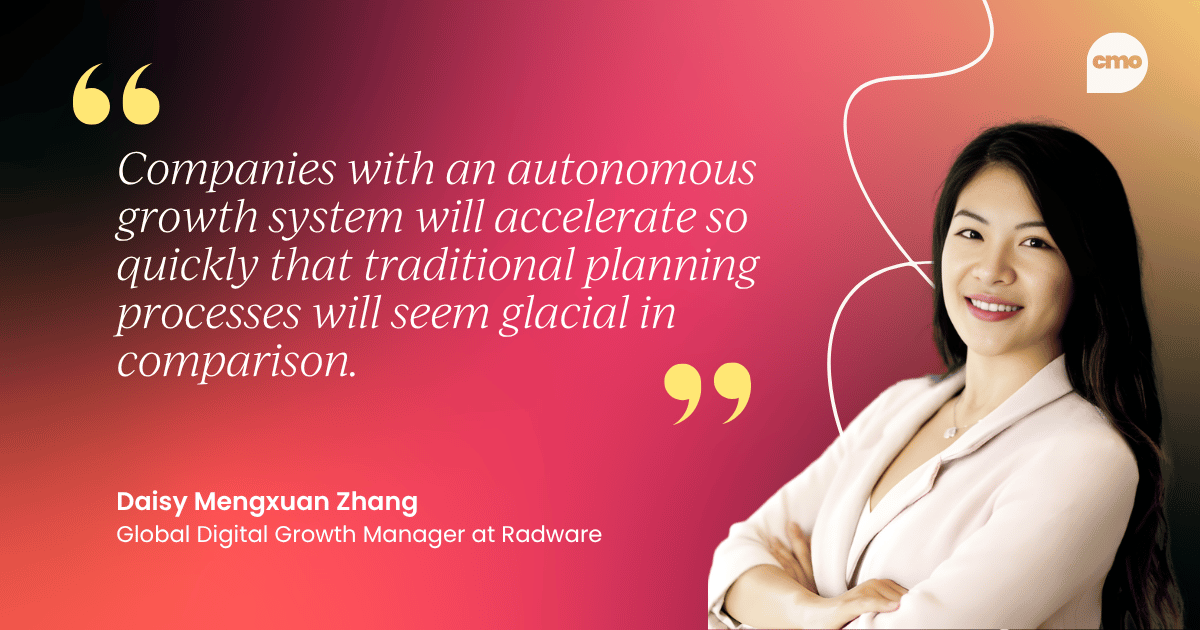
The implications are obvious: companies with an autonomous growth system will accelerate so quickly that traditional planning processes will seem glacial in comparison.
We will recognize and exploit opportunities before we even know they exist. We will optimize for complexities that human marketers cannot begin to grasp. Not only will the gap between us and the machines continue to open, but it will compound as we collect more data and refine our approaches.
Conclusion
I believe we have reached a strategic inflection point in the history of marketing, and most marketing leaders have no idea of the scope of what is happening. What differentiates the marketing organizations that are going to be leaders in the next ten years is their ability to develop AI operating systems, versus just using AI tools to experiment with new ideas.
To achieve the transformation to AI operating systems, a marketing leader needs to invest in far more than just technology. A marketer needs to rethink how growth happens, what tasks a marketing team does, and how a CMO leads a team.
Marketers need to move away from "campaign thinking" and "channel optimization" to "growth orchestration" and strategic management of autonomous operations, as well as moving away from manual planning to strategic governance of autonomous operations.
In terms of developing the capacity to create AI operating systems, there are several progressive maturity stages to work through:
- Integrate AI capabilities into existing workflow processes.
- Create orchestrated processes where AI manages whole functions.
- Build autonomous systems that operate within the strategic boundaries defined by you.
Each stage of development demonstrates a return on investment and develops the capacity necessary for the next stage.
There is significant urgency to this – and I’m not being hyperbolic. Many competitors are already building out the capabilities to create AI operating systems. Companies that can bring these capabilities to operational maturity first will gain many competitive advantages, including access to better data, more insightful decision-making, better optimization, and faster execution that will become increasingly difficult to overcome.
This isn’t about trying to keep up with the latest trends in AI technology; it’s about designing the fundamental architecture of how growth happens before the marketplace forces the issue.
For CMOs who are ready to begin making this transformation, the direction is clear: become the architect of your company's autonomous growth engine. Create integrated systems that will drive competitive advantage. Develop the talent and capabilities needed to design and manage these systems. Define the strategic framework in which the autonomous operations will occur.
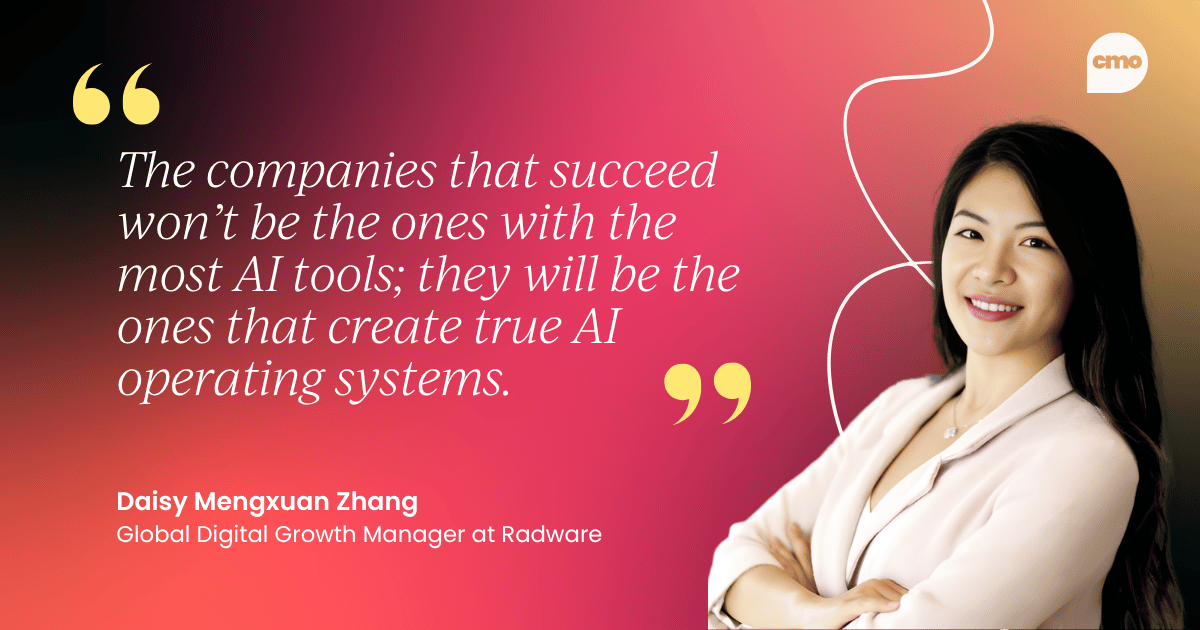
The companies that succeed won’t be the ones with the most AI tools. Companies will be successful if they create true AI operating systems – integrated architectures where the flow of data, the making of decisions, the creation of creative solutions, and the execution of all of these things will be in continuous loops that continue to learn, grow, and create compounded advantages over time.
The question isn’t whether this transformation will occur. The question is whether you’ll lead this transformation or be disrupted by it.


Become a CMO Insider
Thank you for subscribing
Get exclusive insights, frameworks, and strategies from marketing leaders driving real business impact.
An email has been successfully sent to confirm your subscription.
 Follow us on LinkedIn