.png)





I want to start by sharing a short video that, to me, captures what leadership is all about.
This scene is from Hidden Figures. In the movie, set during the age of segregation in the USA, NASA’s black employees had been forced to walk half a mile just to use the restroom. Finally, the director of the Space Task Group snaps and destroys the segregated bathroom sign so everyone can use the same facilities.
For me, that moment reflects the heart of great leadership. It’s about seeing people, understanding their experience, and having the conviction to do something about it.
That brings us to the focus of this article: how you build a culture of excellence that’s grounded in both accountability and empathy. Together, these two elements create an environment where people perform at their best and feel supported while doing it.
Here’s what we’ll explore:
- How relationships, not power, drive effective leadership
- Why balancing empathy and accountability is essential
- Practical ways to lead with authenticity, transparency, and courage
- Tips for building trust, collaboration, and a high-performing team culture
- How to measure success – both the human and business kind
Why relationships matter more than power
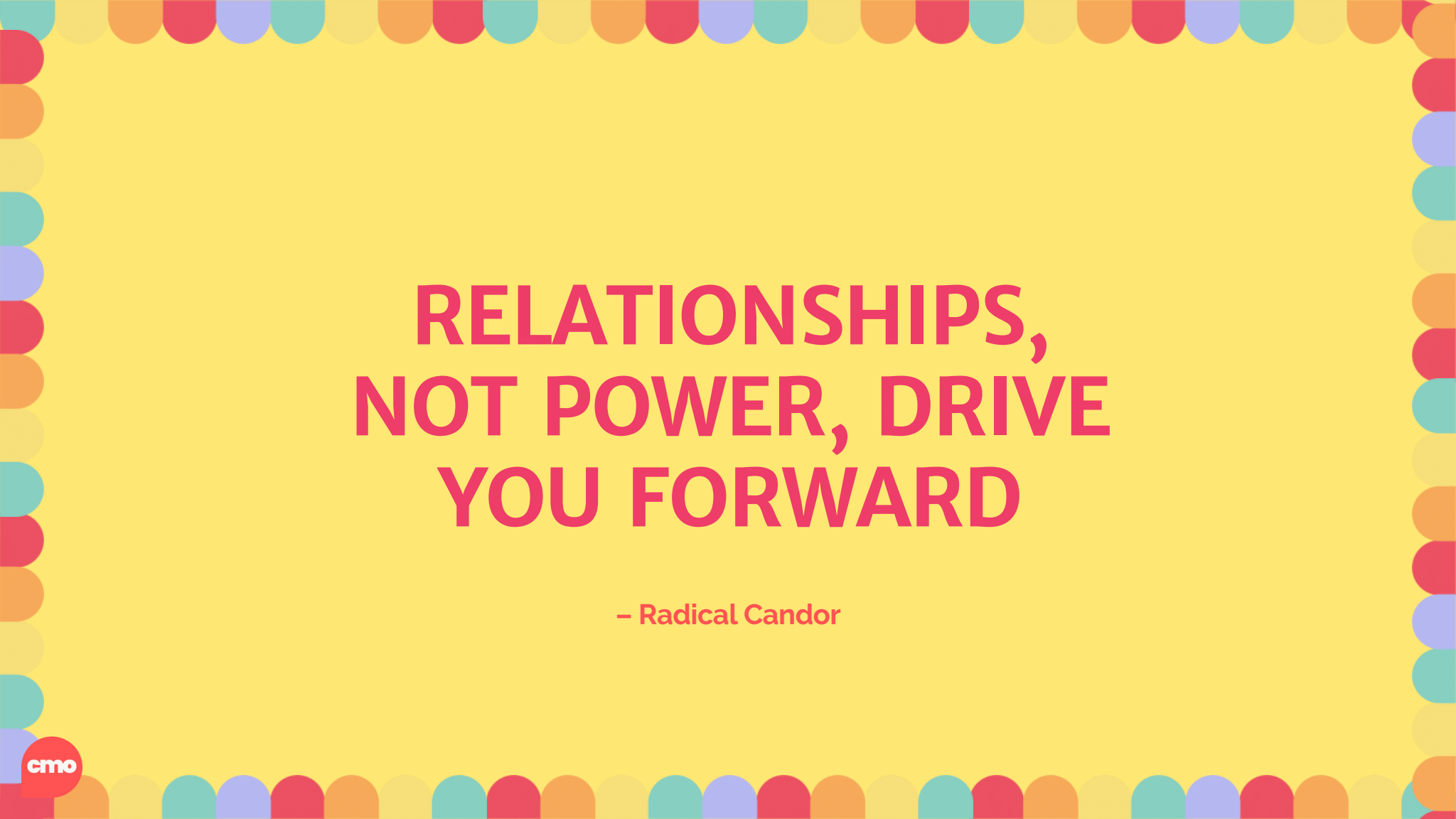
That idea of leading with humanity also connects to one of my favorite books, Radical Candor. At its core, the book reminds us that great leadership isn’t about authority, titles, or hierarchy — it’s about relationships. Kim Scott talks about how “relationships, not power, drive you forward,” and that message has stayed with me throughout my career.
Many years ago, I attended a workshop that introduced the idea of personal power versus positional power. Your title, budget, and role come with authority, a.k.a. positional power. However, real leadership comes from personal power – the respect, trust, and admiration people have for you, regardless of what’s printed on your business card.
At 22, that concept felt abstract. Today, it couldn’t be clearer. What people feel for you as a leader, how you inspire them, and how well you connect with your team ultimately determine how effectively you move the business forward.
I’ve had team members who would do anything for me, and it’s always stemmed from genuine relationships.
One of my favorite examples goes back to my HP days. The company was splitting into two, and I wanted a young marketer in Canada to join my part of the business. On paper, I had zero credibility at the time, so my pitch was simple: the next time you’re in the Bay Area, I’ll cook you an amazing Indian meal. And guess what? It worked.
Since then, every time he’s in my area, he comes over for a meal. That whole team from 2015 is still together on WhatsApp. We celebrate birthdays with the most toneless rendition of “Happy Birthday” imaginable – my husband always covers his ears – and we’ve become a family. Those relationships have shaped who I am as a leader.
For expert insights like this straight to your inbox twice a month, sign up for Pro+ membership.
You'll also get access to a range of certifications, a complimentary Summit ticket, 50+ tried-and-true templates, members-only workshops, and much more.
So, what are you waiting for?
The limits of being nice
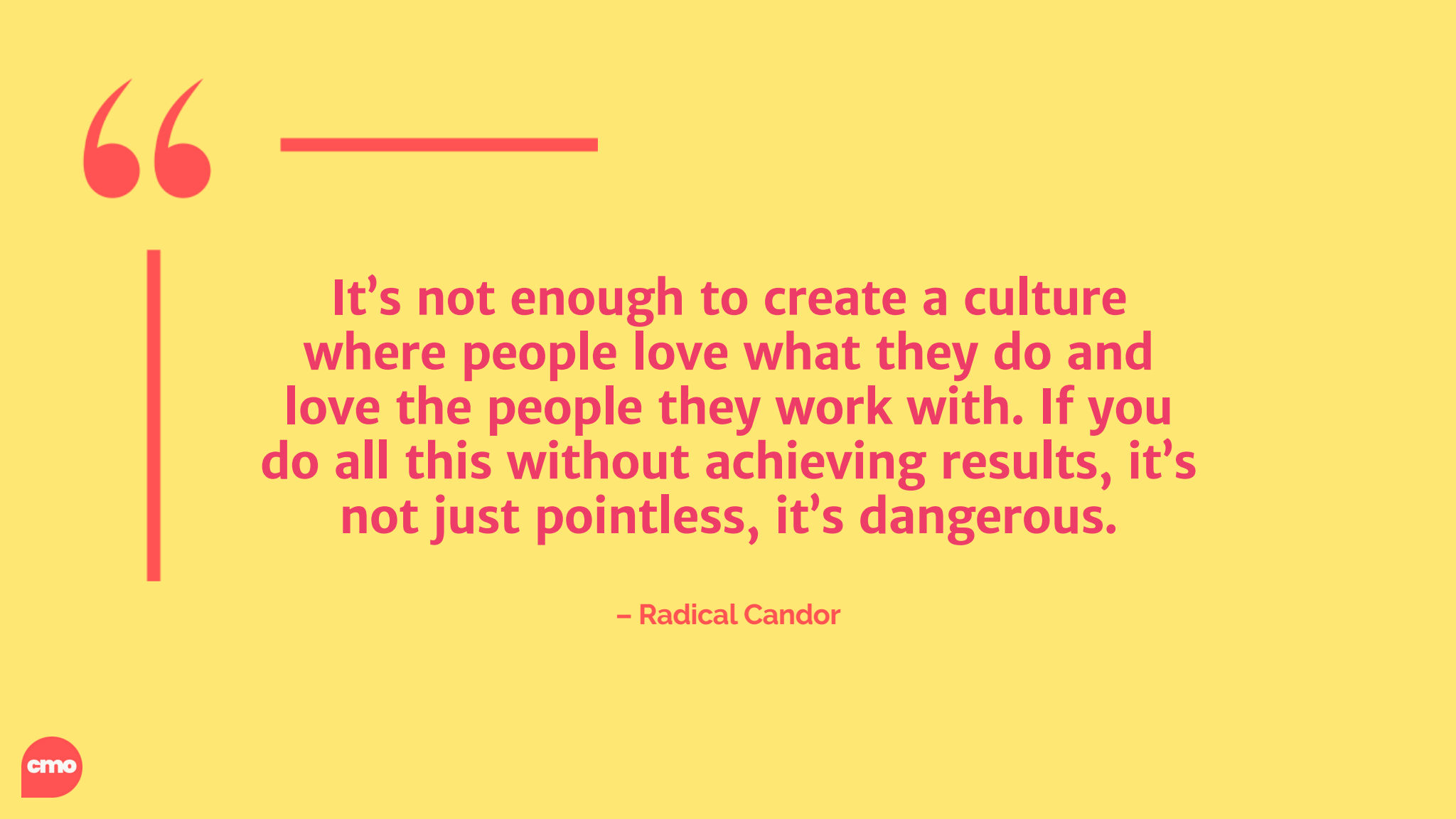
Now, as much as I believe in building relationships, I also believe it’s not enough for people to simply love what they do and love who they work with. If you create that environment but fail to achieve results, it’s not just pointless – it’s dangerous.
I once had someone from NVIDIA join my team. Three months in, she told me, “You guys are just too nice. Why don’t you ever tell the truth? Why don’t you call out bad work?”
That feedback stuck with me. It made me realize how important it is to balance respect with honesty. You can be kind and still deliver clear, direct feedback that helps someone reach their full potential.
If we create a culture of niceness – fun team moments and home-cooked meals included – but don’t hold people accountable, we fail them and the business. Respectful, truthful feedback is essential. It’s how we help people grow and ensure we’re collectively driving toward excellence.
Accountability without empathy doesn’t work
On the other side of the spectrum, when you focus only on accountability – the deadlines, the deliverables, the constant drumbeat of I need to get this done – leadership becomes purely transactional. And when that happens, you create a culture rooted in fear and disengagement.
That’s when you start to see high turnover. People leave. The energy shifts. Negativity creeps in. So you can’t have a culture that’s all sweetness and positivity, but you also can’t build one that revolves solely around results and output. Somewhere in the middle is the real work – learning to balance accountability with empathy.
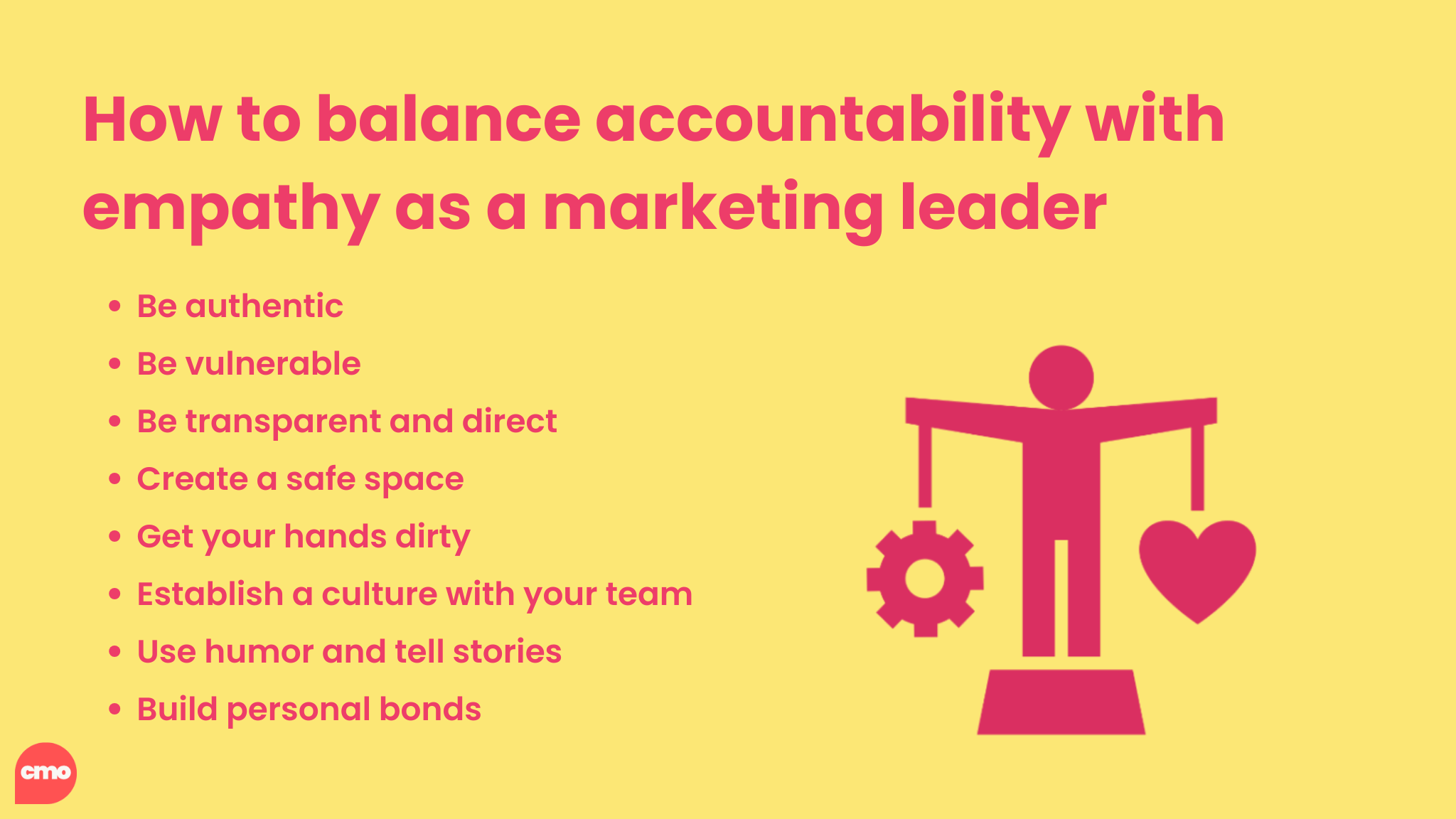
How I balance accountability with empathy as a marketing leader
There isn’t a ready-made formula for this, but I’m going to walk through what I’ve learned. It may not work for everyone, but it’s how I’ve found my own equilibrium.
Create a safe space for authenticity
In her presentation at the CMO Summit, Monica Kumar talked about giving up on perfection and embracing who she really is. I love that.
Authenticity can’t just be a bullet point on a slide. You have to show up as yourself and create a safe space where your team can do the same. They should feel comfortable speaking freely, even if what they want to say challenges your thinking.
I once went to an Aspen Institute program where I heard a story that stuck with me.
A newly married couple goes to visit the wife’s parents. The in-laws decide they must entertain their new son-in-law, so they plan a trip to the county fair. They know the fair is awful, but they feel obligated. The daughter doesn’t want to go either, but she thinks she needs to respect her parents’ effort. The husband doesn’t want to go but feels he should go because the in-laws planned it.
Nobody wants to go to the county fair, and yet nobody speaks up.
That story has stayed with me because I never want my team to go to the figurative county fair simply because they’re afraid to say they don’t want to. I want them to feel safe saying, This doesn’t feel right or There’s a better way to do this. Creating that kind of psychological safety is foundational.


Become a CMO Insider
Thank you for subscribing
Get exclusive insights, frameworks, and strategies from marketing leaders driving real business impact.
An email has been successfully sent to confirm your subscription.
 Follow us on LinkedIn