.png)




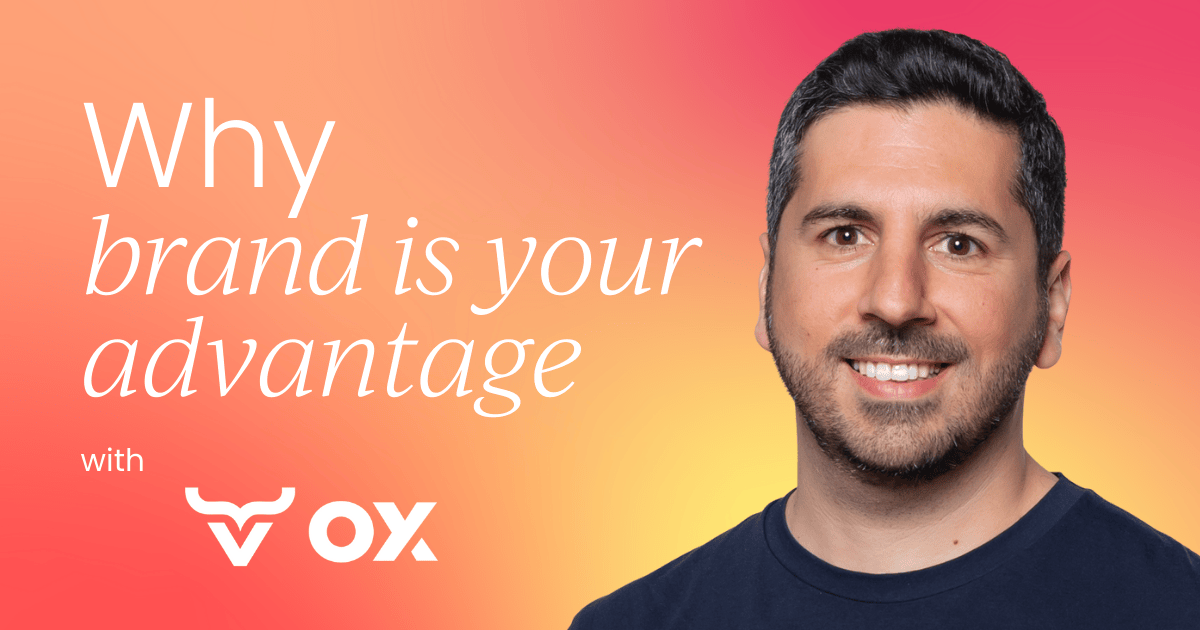
After 15 years in marketing, from user acquisition at companies like 888 and Wix.com to leading teams at startups like Mesh Payments, I’ve seen our field evolve. Now, as VP of Marketing at OX Security, I’m navigating what might be our biggest shift yet: the rise of AI.
The buzz is everywhere, and so is the uncertainty.
What does the future of marketing look like? How do we build our teams? Where should we, as leaders and practitioners, focus our efforts?
I believe the answer lies in a paradox: as technology automates more of our work, our most human qualities (creativity, strategic thinking, and the ability to build a powerful brand) become our greatest assets.
Rethinking the marketing team for an AI-powered world
When building my new team at OX Security, I knew I couldn't just fill traditional roles. The potential of AI to accelerate our work was too great to ignore. This led to the creation of a new position that, at first glance, looks completely different from a typical growth marketing role: the Vibe Growth Marketer.
I have to give a shout-out to my CEO for going with me on this. It was a new concept, but one I felt was essential for our future.
What is a vibe growth marketer?
I see the Vibe Growth Marketer as the glue holding our AI strategy together.
This person works across the entire marketing department – with content, creative, demand gen, and marketing operations – to ensure we are implementing AI-powered workflows everywhere we can.
It’s about more than just using the latest AI tools. It’s about having someone dedicated to sitting down, understanding the unique challenges of each function, and building the automations and experiments that will help us grow faster. This person’s job is to make everyone else’s job more efficient and impactful by leveraging the full power of AI.
Why a dedicated AI role is necessary
Most marketing teams aren't structured for deep AI adoption yet. We see individuals using ChatGPT for content ideas or Midjourney for images, but it’s often happening in silos. It’s not a cohesive, top-down strategy.
A lot of this comes down to KPIs. If your demand gen manager is on the hook for a lead number, they don’t have three months to pause and build a complex AI workflow, even if it would pay dividends later.
That's why we needed someone whose dedicated mission is to build that infrastructure in the background, seeing the opportunities everywhere and connecting the dots for the entire team.
The skills that matter most in the AI era
So, with AI poised to automate so much, what skills should marketers focus on developing? Where should we put our weight to not just survive, but thrive?
I believe the path forward requires us to double down on the things machines can't do.
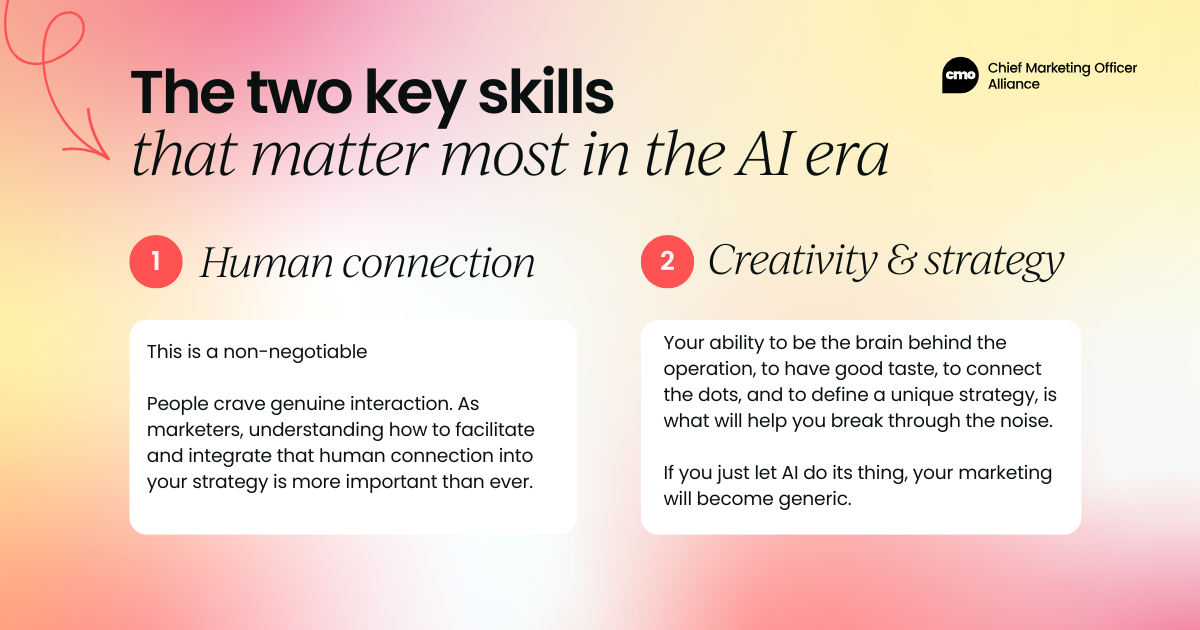
Human connection is non-negotiable
First, AI is not here to replace human connection. In fact, I see the opposite happening. The demand for in-person events, executive dinners, and face-to-face meetings is only growing. People crave genuine interaction. As marketers, understanding how to facilitate and integrate that human connection into your strategy is more important than ever.
Creativity and strategy will set you apart
Second is the creative and strategic aspect. AI can generate five campaign ideas, but they will likely be the five most common and generic ideas. It can write a blog post about AI, but it won't have a unique voice or a truly innovative angle.
Your ability to be the brain behind the operation, to have good taste, to connect the dots, and to define a unique strategy, is what will help you break through the noise. If you just let AI do its thing, your marketing will become generic. And being generic is the enemy of success.
You still need a human behind the wheel to say, "This speaks to my customer," or "This is the emotion I want to evoke." That strategic oversight is irreplaceable.
The cautionary tale of moving too fast
We’re already seeing companies learn this lesson the hard way. A few months ago, Klarna made headlines for replacing a large portion of its customer success team with an AI chatbot. It was a bold move, positioned as a step into the future and likely a play for positive PR in the eyes of investors.
But it didn't work. They soon found themselves rehiring for those same roles.
What can we learn from this? Two things, I think. First, the technology isn't fully there yet. We can't just swap out entire teams for AI and expect business as usual. The evolution will take time.
Second, in roles where the human element is super strong, like customer success, the risk of automation is incredibly high. When you remove that human touch, you risk churn and damage your brand. The Klarna case is a classic example of what happens when you prioritize being first over being smart. A gradual approach, with pilots and testing, is a much safer bet.
How to future-proof your marketing career
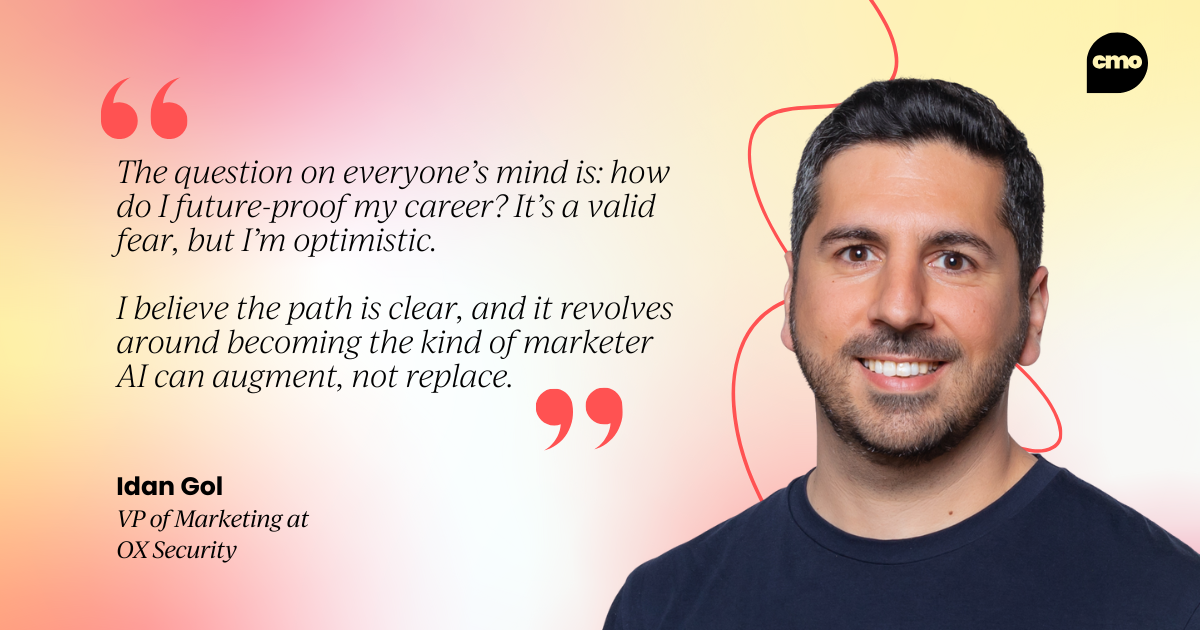
With all this change, the question on everyone’s mind is: how do I future-proof my career? It’s a valid fear, but I’m optimistic. I believe the path is clear, and it revolves around becoming the kind of marketer AI can augment, not replace.
Master the art of storytelling
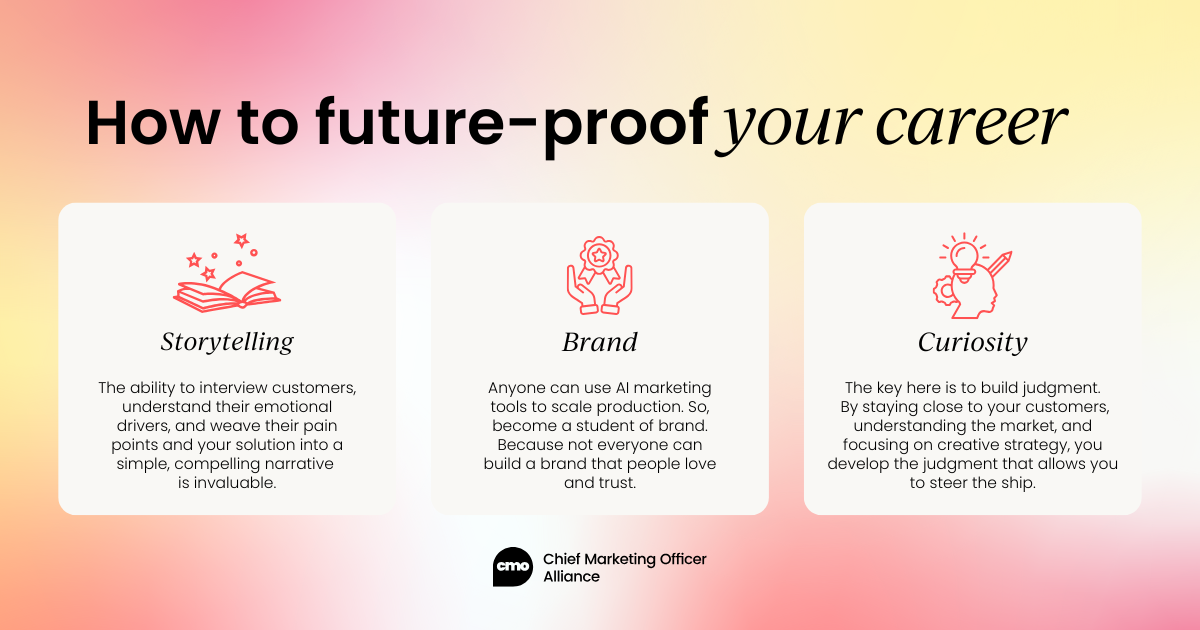
You can’t just tell an AI, "Create a groundbreaking story that fits our unique company, resonates with our specific customer pain points, and has never been told before." That's a human skill. The ability to interview customers, understand their emotional drivers, and weave their pain points and your solution into a simple, compelling narrative is invaluable.
This is where you should invest your time. Learn what makes a good story. Learn what makes a good brand.
Become a student of brand
With the noise from AI-generated content only getting louder, brand is the one thing that will allow you to stand out. Think about the most powerful brands. When Steve Jobs returned to Apple, the first thing he did was launch the "Think Different" campaign. He knew that to win, Apple needed more than good products; it needed a powerful brand that people could connect with emotionally.
That’s your job now. Understand what makes a brand resonate. Whether it’s embedding yourself in a culture like Liquid Death did with extreme sports and lifestyle, or simply finding a unique way to talk about your product in a crowded B2B market, your brand is your ultimate differentiator.
The advantage that large companies once had, the ability to produce massive amounts of content, is shrinking. Now, anyone can use AI marketing tools to scale production. But not everyone can build a brand that people love and trust. Those who can will be the winners.
Stay curious and adaptive
Finally, you have to be more adaptive than ever. Stay on top of the best AI tools and trends in your specific domain. If you’re in marketing operations, for example, your world is already becoming highly automated. You must lean into the technical side of things to stay relevant. You could even become the core of the company, automating work that was once done by entire SDR teams.
The key is to build judgment. AI operates on inputs; it doesn't have true judgment. By staying close to your customers, understanding the market, and focusing on creative strategy, you develop the judgment that allows you to steer the ship.
The rise of AI isn't the end of marketing; it's a clarification of what's always been most important. It’s the rise of the brand builder, the storyteller, and the strategist. It’s a return to the human side of what we do.
And honestly, I find that incredibly exciting.
Join our Slack community to get access to top CMOs all over the world, ask your most pressing questions, get inspired by success stories, and so much more.
 CMO Alliance


Become a CMO Insider
Thank you for subscribing
Get exclusive insights, frameworks, and strategies from marketing leaders driving real business impact.
An email has been successfully sent to confirm your subscription.
 Follow us on LinkedIn