.png)






Every CMO eventually faces the consultant question.
Maybe revenue has stalled, and the board is pushing for outside expertise. Maybe you're eyeing a new market and realize your team has never done international expansion. Or maybe, if you're being honest with yourself, you already know what needs to happen, but need someone else to say it out loud and validate it before you go to the rest of the executive leadership team.
Strategy consultants can be transformative. They can also be expensive exercises in validating decisions you've already made. The difference comes down to timing, openness, and whether you're hiring for transformation or permission.
After 17 years of building internally and advising marketing teams, I've seen both outcomes.
Here's how to know which one you're setting yourself up for.
When consultants actually pay off
The highest ROI on consultant engagements tends to be when the company is entering unfamiliar territory and needs someone who has navigated that terrain before.
This could be motions such as preparing for a funding round, navigating M&A, expanding into a new geography, moving upmarket, or launching a product-led growth motion for the first time.
These are inflection points where the cost of learning by trial and error far exceeds the cost of hiring someone who has done it twenty times. Even the best marketers aren’t good at everything. Wisdom is knowing when to ask for help or seek outside counsel.
I worked with a B2B SaaS company that needed to shift from selling to "everyone" to a highly targeted ICP in a new country. Their team had never executed that kind of pivot. They didn't know how to narrow their focus without spooking investors accustomed to seeing broad pipeline numbers. Saying “no” to inbound that didn’t match their ICP seemed like leaving money on the table. They needed someone to guide the transition and set realistic expectations for how long the payoff would take.
The pitch was simple: another year of the same approach, and they wouldn't survive. A year of building in the right direction to the right people, and they'd thrive.
Eight months later, they had $28M in pipeline, up from $3M. That's a consultant engagement that paid for itself many times over.
Could they have figured it out with some elaborate late-night ChatGPT sessions? Maybe. Would it have been as effective? Doubtful. The information isn’t the only thing you need; it’s the action plan and the “how” that goes with it.
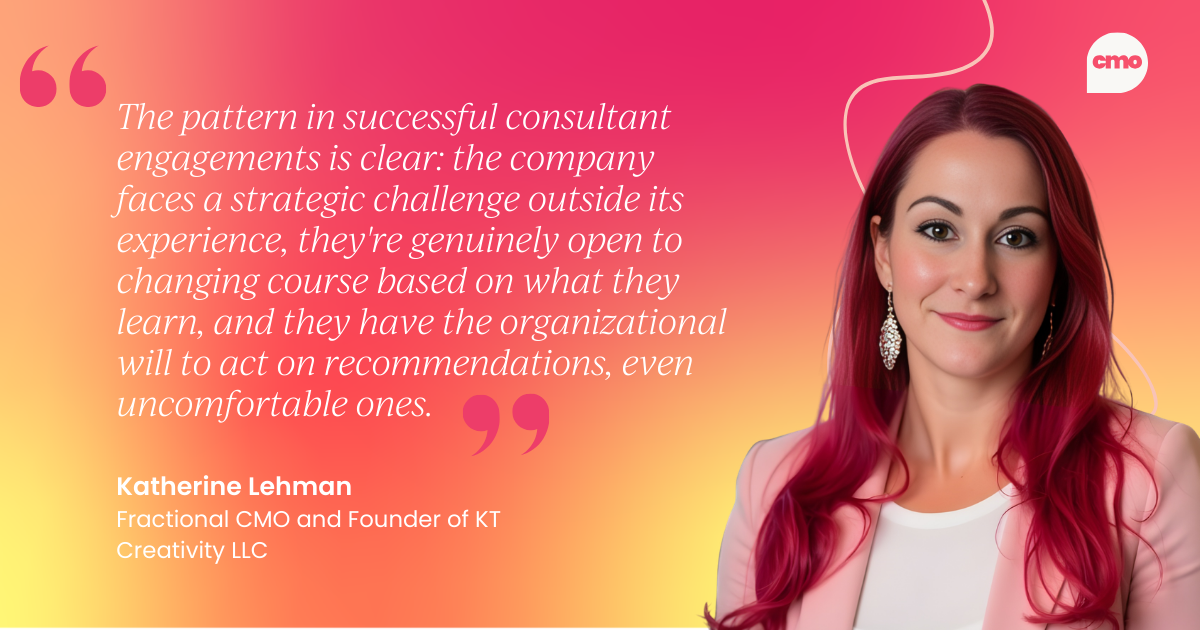
The pattern in successful engagements is clear: the company faces a strategic challenge outside its experience. They're genuinely open to changing course based on what they learn. And they have the organizational will to act on recommendations, even uncomfortable ones.
When consultants become expensive validation
Here's the uncomfortable truth I’ve found: many consultant engagements aren't really about getting advice. They're about getting permission.
You already know you need to fire that agency. You already know your demand gen leader is actually a brand marketer who's in over their head. You already know the tech stack is a mess, and someone needs to own the rebuild.
But making those calls is hard, politically fraught, or just unpleasant.
You avoid the discomfort and keep the status quo instead, until revenue is way down and investors are screaming. Then you bring in a consultant to tell you what you already know, hoping that external validation will make the hard decision easier.
It doesn't work. Or rather, it works a little bit and then falls apart.
I've seen this play out painfully.
A company brought in a consultant because revenue was stalled, and they couldn't figure out why. The real issue was a leader mismatch: a brand marketer was trying to run demand generation and dragging the team down. They had brilliantly navigated a merger and new brand identity, but now couldn’t convert the brand into revenue.
The consultant identified this clearly. The company already knew. The board already knew. They liked the leader, but they wanted someone else to tell them that it was time. The company made that one change because they'd already decided it was necessary. But they ignored the rest of the rebuild recommendations.
The result was another year of chaos instead of sustainable growth.
Employees left, sales pointed fingers at marketing, and the demand generation engine stalled out. Which led to another consultant being brought in the following year to repeat the entire diagnostic process. Two years and significant consulting fees later, they were back where they started, with fewer employees and more scar tissue.
The red flag in that engagement was visible from the beginning: the CEO wasn't open to change that he hadn't already deemed necessary. He wanted validation, not advice.
If you find yourself hoping a consultant will confirm what you've already decided, save your money and make the decision yourself.
The PE and VC Board dynamic
There's another scenario that derails consultant engagements: when the CMO doesn't get to choose who's in the room.
We've all seen it.
New leadership brings in their old team. Board members and PE firms insist on using consultants they know. The pattern makes sense from their perspective. They go where they have established trust.
But this creates a problematic dynamic.
The CMO may have a great consultant in their network who understands their specific challenges, one who bridges the gap in their known skills. They get overruled by investors who want their preferred firm. That firm has a direct line to the money and may be more interested in preserving their ongoing engagement than delivering recommendations the CMO can actually use. They want to bring in (often expensive) external resources in the hope of going faster, but often don’t because of poor implementation and lack of team buy-in.
The result is a situation where the CMO disagrees with the consultant's recommendations, but leadership loves them. The CMO ends up holding the bag on running a team, strategy, and plan that they didn't help shape.
That's not a recipe for success.
If you find yourself in this position, a few approaches can help.
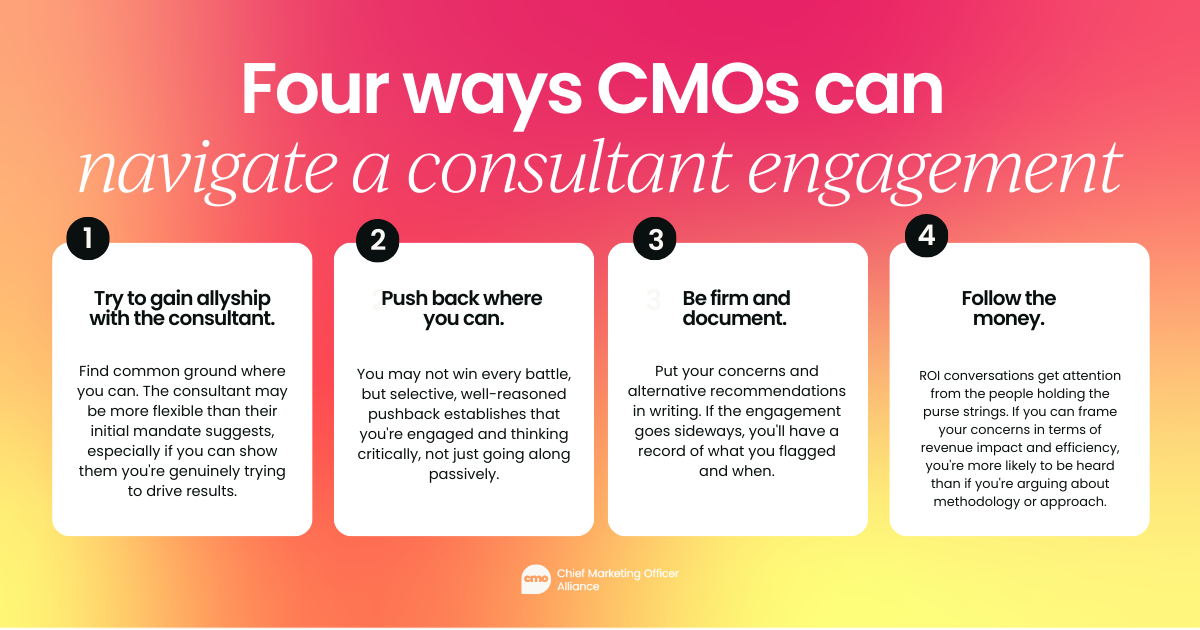
Try to gain allyship with the consultant. Even if you didn't choose them, you have to work with them. Find common ground where you can. The consultant may be more flexible than their initial mandate suggests, especially if you can show them you're genuinely trying to drive results.
Push back where you can. You may not win every battle, but selective, well-reasoned pushback establishes that you're engaged and thinking critically, not just going along passively.
Be firm and document. Put your concerns and alternative recommendations in writing. If the engagement goes sideways, you'll have a record of what you flagged and when.
Follow the money. ROI conversations get attention from the people holding the purse strings. If you can frame your concerns in terms of revenue impact and efficiency, you're more likely to be heard than if you're arguing about methodology or approach.
Three questions before you hire
Before engaging a strategy consultant, pressure-test your own readiness with these questions:
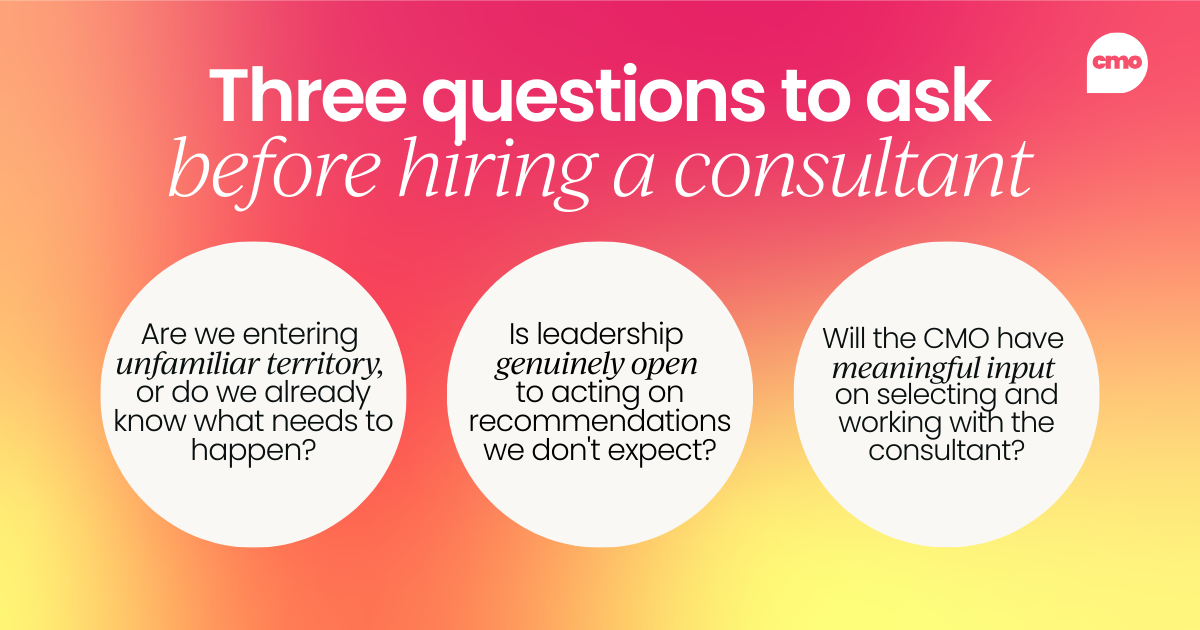
1. Are we entering unfamiliar territory, or do we already know what needs to happen?
If you're expanding into a new market, launching a new GTM motion, or preparing for a major transaction, outside expertise makes sense. If you're trying to avoid making a hard internal decision, save your money and make the call yourself. Budgets aren’t what they used to be, so don’t waste them on getting advice you don’t need.
2. Is leadership genuinely open to acting on recommendations we don't expect?
A consultant's value comes from telling you things you don't already know and challenging assumptions you haven't questioned. Their outside perspective on things you may be too close to is invaluable. If the CEO or board will only accept recommendations that confirm existing plans, the engagement is already compromised.
3. Will the CMO have meaningful input on selecting and working with the consultant?
If the consultant is being imposed from above with no CMO involvement, the engagement is likely designed to validate someone else's conclusion. That doesn't mean you can't make it work, but go in with clear eyes about the dynamic.
If you answered "unfamiliar territory," "yes, genuinely open," and "yes, meaningful input," you're positioned to get real value from a consultant engagement.
If not, you might be paying for expensive validation. And that's a problem you can solve without writing a check.


Become a CMO Insider
Thank you for subscribing
Get exclusive insights, frameworks, and strategies from marketing leaders driving real business impact.
An email has been successfully sent to confirm your subscription.
 Follow us on LinkedIn