.png)





When was the last time you told your own story with the same care you give your company’s?
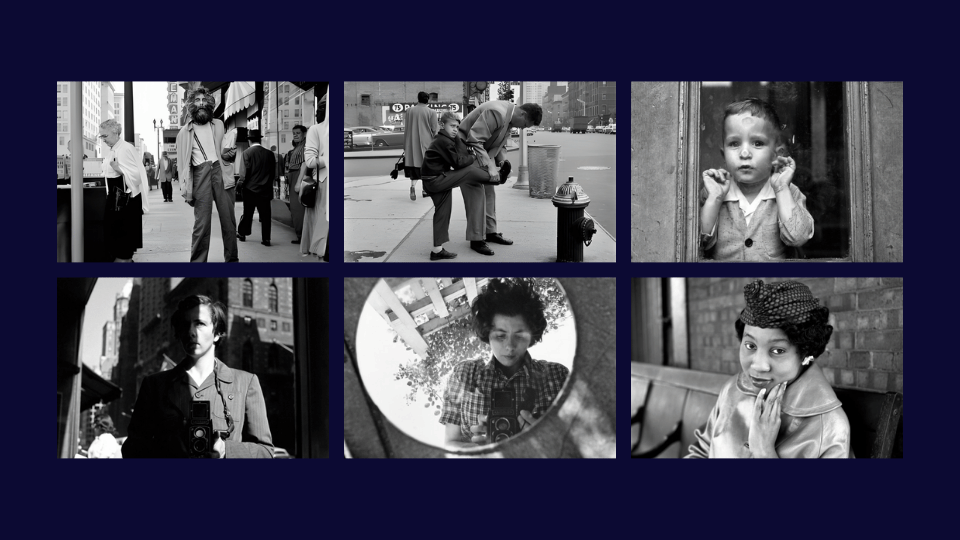
Vivian Maier never did. Born in 1926, she spent her life working as a nanny while quietly photographing the streets of New York and Chicago. She captured thousands of striking images – ordinary people, forgotten corners of the city, fleeting moments most of us walk past without noticing.
And yet, she kept them all to herself.
In 2007, a local historian named John Maloof bought a box of her negatives at a storage locker auction for a few hundred dollars. He didn’t even look at them for two years. When he finally did, he realized he’d uncovered a body of work that rivaled the masters of street photography.
He shared a few photos online. The reaction was instant. Who was Vivian Maier? How had this talent gone unnoticed? By then, she had already died, unknown and destitute. Today, her photographs hang in galleries around the world, and her life is the subject of an Oscar-nominated documentary.
If you’re a CMO or senior marketing leader, this story might feel uncomfortably close to home. You’re exceptional at spotlighting products, companies, and other people’s brilliance. You build narratives, shape perception, and create value at scale.
But when it comes to marketing yourself, you stay quiet.
This article is about changing that. We’ll explore why visibility feels so hard for marketers, why it matters more than ever in a shifting leadership landscape, and the practical steps you can take to build a personal brand that serves both you and the organizations you lead.
Unlike Vivian Maier, you still have the chance to make sure your work – and your impact – are seen.
Why we keep our talents a secret
So, why do we hide our light under bushels? I've done some digging, and here's what I've found:
- Fear of what others will think: This is usually the biggest blocker. Will people see you as self-promotional, arrogant, or trying too hard? The worry about how you’ll be perceived often outweighs the value of being visible in the first place.
- Imposter syndrome: Even at the highest levels, that inner voice shows up. I interview wildly successful women on my podcast, and every single one admits to moments of doubt – “Maybe I’m not as good as they think I am.” The irony is that that feeling usually means you’re growing and pushing into new territory.
- Commitment concerns: Putting yourself out there takes effort. Sometimes it’s easier to binge The Golden Bachelor (five stars – would recommend!) than update your LinkedIn profile. Visibility can feel like one more thing on an already full plate.
- Privacy concerns: Between phishing emails, spam messages, and people trying to get into your inbox from every direction, it’s easy to understand why many leaders hesitate to make themselves more visible online. Why put another target on your back?
- The perception of self-promotion: No one wants to be that person – the overly self-important wannabe-influencer. The fear of being labeled narcissistic keeps a lot of talented leaders quiet.
- Fear of imperfection: We hold ourselves to impossibly high standards. Every post must be flawless – no typos, perfect branding, and the right color palette. But thought leadership isn’t about perfection; it’s about connection and sharing what you know in a way that helps others.
For expert insights like this straight to your inbox twice a month, sign up for Pro+ membership.
You'll also get access to a range of certifications, a complimentary Summit ticket, 50+ tried-and-true templates, members-only workshops, and much more.
So, what are you waiting for?
The mindset shift modern CMOs can’t afford to ignore
Jeff Bezos once said something that stuck with me:
“Your brand is what people say about you when you're not in the room.”
As a marketing leader, you already understand the power of narrative and perception. What’s easy to forget is that this applies just as much to you as it does to the brands you steward.
Whether you’re in the room or not, a story is being told about your expertise, your relevance, and your leadership – and you have far more influence over that story than you might think.
This is especially important today, when careers are anything but linear. The days of spending 30 or 40 years at one company are largely behind us, and most of us will hold a dozen roles over the course of our working lives.
The pandemic made that reality painfully clear. Roles disappeared overnight. Stability proved fragile. And many leaders were left feeling more exposed than they ever expected. It’s no surprise that, in the years since, thought leadership and digital visibility have accelerated dramatically.
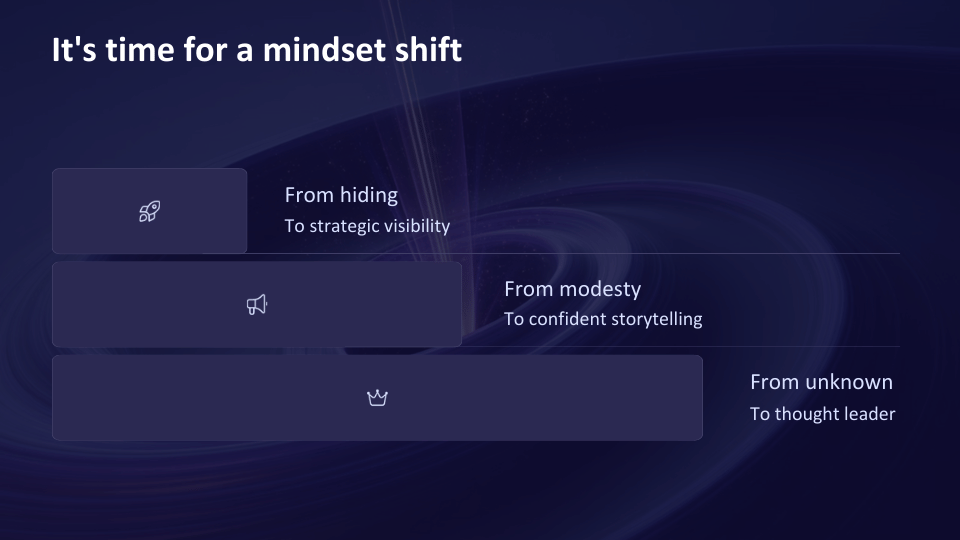
Building a personal brand isn’t about ego or self-promotion – it’s about resilience. It’s about reducing vulnerability, keeping your options open, and ensuring that when your name comes up, what follows is a clear, intentional narrative you’ve helped shape.
Five steps to building your personal brand
So, how can you shift your mindset and start building your personal brand? Let me share what I've learned about putting yourself out there without feeling like you're shouting into the void.
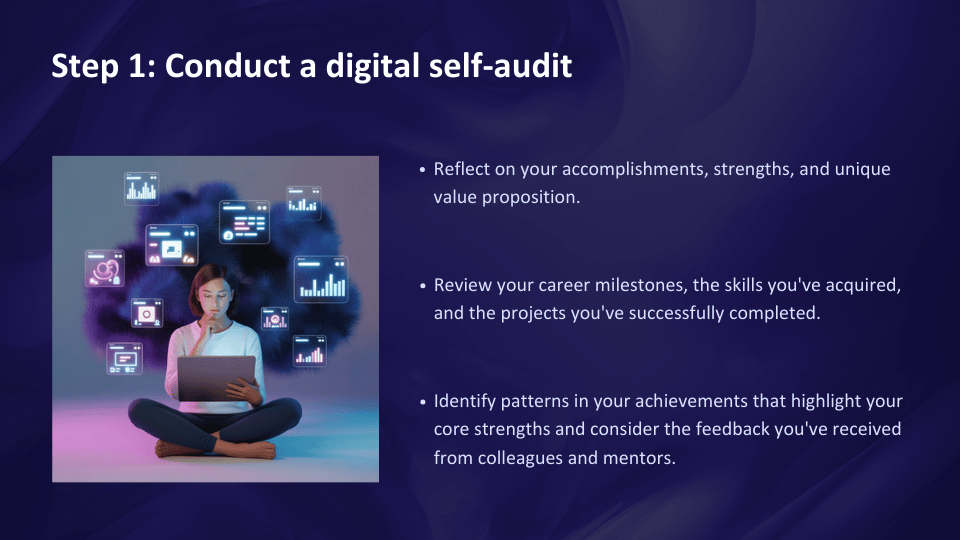
1. Conduct a digital self-audit
Start by taking inventory. What have you accomplished? Where have you succeeded? What patterns emerge when you look at your promotions, your wins, your moments of impact?
Look at career milestones. Read old performance reviews. Ask trusted colleagues about your superpowers – they often see what we miss.
Then Google yourself. Go ahead, do it right now. I'll wait. What comes up? Does it reflect who you are today? Does it showcase the leader you've become?
And we can’t forget about LinkedIn. Recruiters, board members, peers, and even your own CEO are far more likely to scan your profile than read a résumé, and the good news is you control that narrative.


Become a CMO Insider
Thank you for subscribing
Get exclusive insights, frameworks, and strategies from marketing leaders driving real business impact.
An email has been successfully sent to confirm your subscription.
 Follow us on LinkedIn