.png)







Created by:
 CMO Alliance
When work isn't evenly distributed across your team, the signs don't always show up right away. Some people are quietly burning out while others are underutilized – and neither situation is good for performance or morale.
This guide gives you a structured way to surface those imbalances before they become bigger problems, and to take action that makes workloads fairer and more sustainable.
Who is it for?
This guide is for marketing leaders who manage people and want to stay ahead of capacity issues. It's particularly useful if you're heading into a quarterly planning cycle, navigating a team reorganization, or noticing signs of stress or disengagement on your team.
It works equally well as a solo exercise or as something you work through collaboratively with your team; the prompts are designed to spark honest conversations, not just surface data.
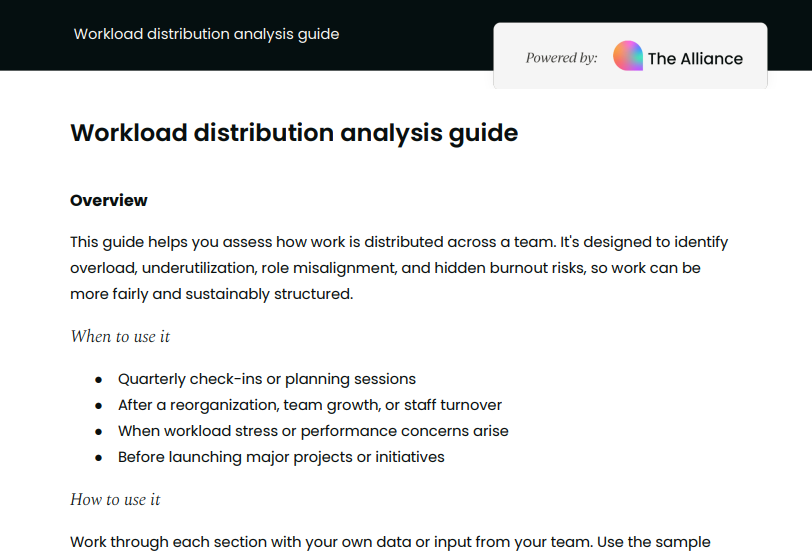
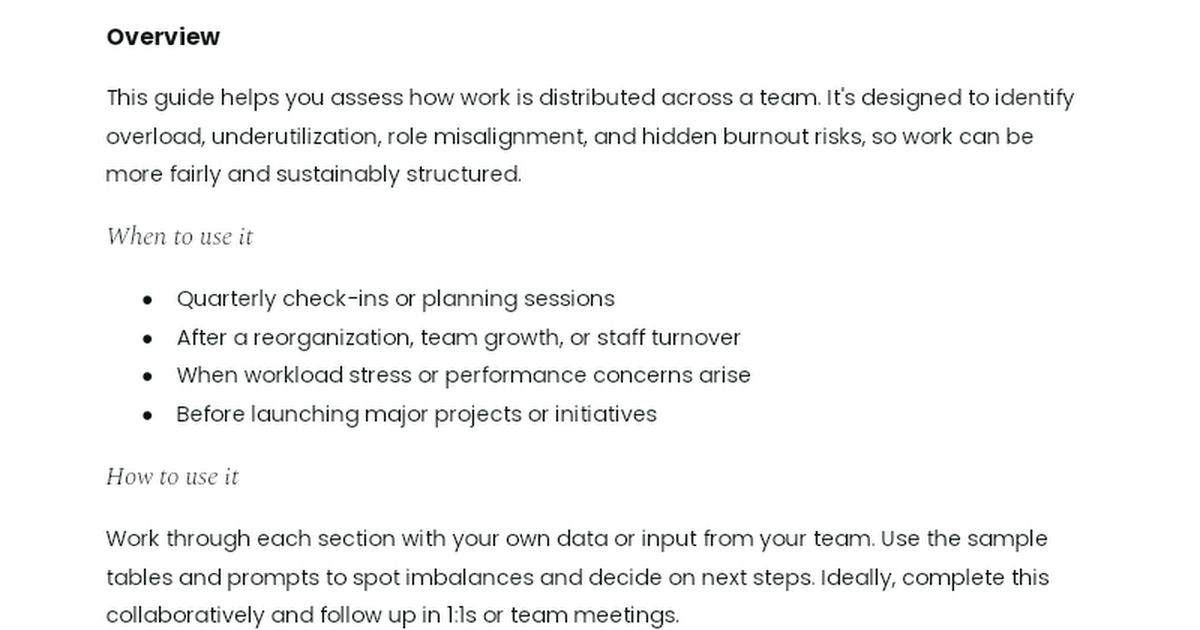
How to use the guide
The guide is broken into five sections, each building on the last.
- Gather data on each team member's core responsibilities, active projects, and estimated hours per week – including BAU tasks and hidden work like meetings and ad hoc support. This gives you a realistic baseline to work from.
- Assess workload balance using the guide's prompts to identify who's overloaded, who's underutilized, and where single points of failure might exist. An optional scoring matrix helps you visualize load across the team at a glance.
- Analyze alignment by going a level deeper – not just how much work someone has, but whether it matches their role, their strengths, and their development goals. This is where you'll often spot people who are capable of more but stuck in the wrong kind of work.
- Spot burnout flags by reflecting on behavioral signals: declining performance, disengagement, or persistent stress. These are easy to miss in day-to-day management, so having a structured prompt to check in on them is valuable.
- Create a rebalancing action plan with clear owners, timelines, and check-in dates, so the changes you identify actually get made.
Get your workload distribution analysis guide



Become a CMO Insider
Thank you for subscribing
Get exclusive insights, frameworks, and strategies from marketing leaders driving real business impact.
An email has been successfully sent to confirm your subscription.
 Follow us on LinkedIn