.png)





When every marketing team can produce professional-quality content at scale, it's tempting to conclude that content itself has been commoditized and brand matters proportionally less. The evidence points in the opposite direction.
As AI reduces the cost of content production toward zero, the scarcest asset becomes trustworthy, distinctive, authentic brand identity. The brands maintaining pricing power, buyer preference, and category authority in an AI-saturated content environment are those that have invested in brand as a strategic function, not just a production constraint.
Brian Button, Brand Strategist and Advisor, describes where the market is heading: "We're heading into an era where craft, perspective, and authenticity matter more than volume. AI becomes infrastructure, not the product. Consumers will reject AI-generated content en masse. They're already tired of it. By 2027, they'll actively avoid it in favor of community, interaction, and belonging."
CMOs can agree or disagree with that timeline. The underlying dynamic is already visible in the data. 75.6% of marketers cite loss of human creativity and originality as their top concern about AI.
That concern is a signal. It means the industry already senses that the volume game will produce diminishing returns, and that the brands with distinctive voice, original perspective, and genuine human character will stand apart from the noise.
The outside-in brand opportunity
Traditional brand building has been an inside-out process. Brand teams define identity, create guidelines, and push that identity into the market. The brand was the assertion; the market responded over time.
AI enables a different approach: using continuous, real-time market signal analysis to shape brand positioning from the outside in, based on what buyers are actually grappling with rather than what brand teams assume they care about.
Monica Kumar, CMO at Extreme Networks, built an entirely new product category using this method. Her team surveyed hundreds of buyers and IT leaders to understand what they were actually struggling with.
The finding: 79% of people were using three or more tools to do their job, creating unmanageable complexity. That buyer-derived insight, not an internal positioning exercise, became the foundation for what Kumar describes as "the networking industry's first ever platform."
Mehak Chowdhary describes what this looks like operationally: "We set up workflows to scrape search queries, paid ad data, competitor pages, review sites, and LinkedIn discourse. We clustered language patterns by ICP, objection, and pains. While being a cool brand, we have realized we're so far in positioning from actual pain, we're now redeveloping the messaging."
That last sentence is the point. AI surfaced a gap between how the brand was positioned and what the market actually cared about. Without that signal processing capability, that gap might have persisted for months or years while the sales team continued walking into conversations with messaging that didn't resonate.
The CMOs using AI for outside-in brand work aren't replacing creative judgment with data. They're using data to make sure creative judgment is working from accurate premises.
From brand police to brand architects
The role of brand leadership is changing, and CMOs who don't manage that change deliberately will find their brand teams doing the wrong work.
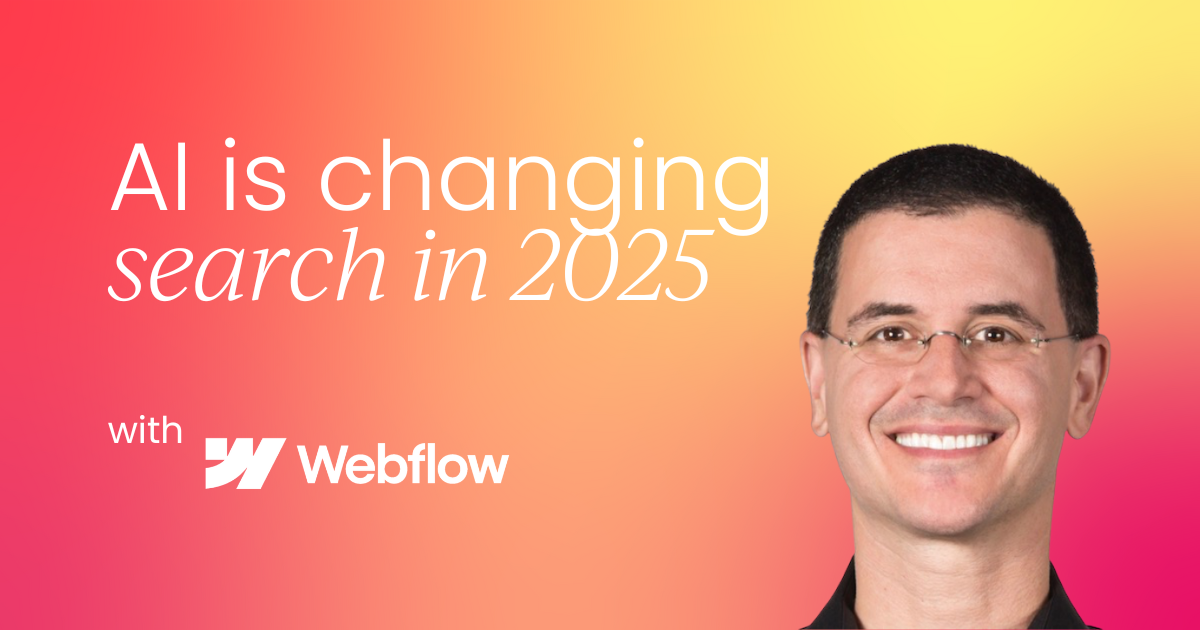
Guy Yalif, Chief Evangelist at Webflow, calls this "setting the playground": "You want the brand team to set a playground in which the performance team can operate. What's the voice? What are the colors, images, words, spacing? What are the concepts you want out there? Set that as a boundary and then let the performance team run."
This requires a new level of precision in articulating brand. Vague descriptors like "professional" or "approachable" don't work as AI parameters. What's needed is explicit instruction about linguistic patterns, sentence structure preferences, topics to avoid, tonal registers for different contexts, and specific examples of what the brand sounds like at its best and worst.
Avi Bhatnagar, VP of Demand Gen Marketing at ServiceChannel, describes the granularity required: "AI-generated content often sounds very robotic. It's very corporate speak."
His solution: explicit prompts that tell AI what patterns to avoid specifically. "When you look at words like furthermore or moreover or additionally, ChatGPT loves to use those words. But we know that they don't sound human."
That level of specificity is brand architecture work. It requires deep knowledge of brand voice and genuine attention to what makes the brand distinctive.
Chetan Deshmukh offers a practical quality test that works regardless of whether content was AI-generated: "Read it out loud. Does it sound like something a real person at our company would actually say to a client? Or does it sound like it was generated by a marketing bot, too clean, too balanced, full of words like 'leverage' and 'transformative'?"
The test is simple and catches a large proportion of the problems that emerge when AI is given insufficient brand context.
Training AI on brand voice
As AI becomes the primary production engine, training it on authentic brand voice becomes critical brand strategy work, not a technical task for someone in marketing operations.
Liza Adams, AI Advisor and Go-to-Market Strategist, has developed a sophisticated approach: building what she calls "digital twins," custom AI systems trained on specific voices, frameworks, and communication styles.
Her method involves comprehensive training: "I trained it. Here's my bio. There are some articles that I've written in here. I even wrote my personal story. I have added some of my frameworks, my thinking, my newsletters in here."
The organizational application of this is significant. One marketing leader Adams works with "has simulated the executive team, the leadership team, and she uses these simulators to pressure test messaging on their behalf because she has trained it on the tone, language, and voice of the executives, their frameworks, their thinking, how they tend to communicate."
The result is an AI system that can draft content and flag when drafts diverge from how the executive team actually communicates. That catches misalignment before it reaches the market, at a volume that human review alone couldn't sustain.
Building this capability requires moving beyond style guides to comprehensive voice documentation: actual examples of brand communication at its best, specific forbidden phrases and patterns, structural preferences, and the reasoning behind brand decisions.
The brands treating this as serious strategic work are building a capability that compounds. Better-trained AI produces better-quality outputs, which generates better performance data, which informs better training.
Managing brand presence in AI systems
Buyers are now researching categories and vendors through AI before they ever speak to sales. 35% of leads at some organizations now discover brands through LLM searches. That number will grow. The competitive and brand implications are direct.
When a prospect runs an AI-powered competitive analysis, and the information about your brand is inaccurate, outdated, or unfavorable, you're walking into sales conversations with a handicap that didn't exist a few years ago and that you didn't create.
Monica Kumar encountered exactly this: a prospect arrived with an AI-generated competitive analysis containing wrong information about Extreme Networks. The sales team had to spend time correcting misconceptions before they could make a positive case.
Her response was to build a GEO (Generative Engine Optimization) playbook, tracking "how favorably and positively our company is placed versus the competition when certain types of questions are asked in the LLM."
That playbook brought together product marketing, content marketing, web, and SEO in a cross-functional effort to ensure that the content AI systems draw on to represent the brand is accurate, comprehensive, and current.
Most organizations aren't doing this yet. Which means they don't know how AI is representing them, can't correct inaccuracies, and are leaving brand impression management to chance.
The content strategy for managing AI representation is the same as the strategy for citation: original research, expert-attributed perspectives, and comprehensive knowledge architecture. Brands that consistently produce authoritative, accurate, citable content get represented more favorably in AI-generated category analysis.
Authenticity as competitive strategy
Elaine Zelby, Co-founder and CRO at Tofu, draws the line clearly:
"When it comes to creativity, you absolutely should not outsource your brand, your messaging, your voice to AI. However, it can help take that and amplify it."
AI should scale what's genuinely yours. It can't originate what makes a brand meaningful.
Yana Sirenko, EU Channel Partners Marketing Lead at Samsung Electronics, is specific about where human judgment must remain:
"The idea and execution always stay human-led. I recommend using real people in creative assets and never using AI to show product use or make promises to consumers. Authenticity comes first."
Thiago Monteiro frames the trust dimension that determines long-term brand equity:
"As automation becomes more widespread, it will become harder to distinguish what is real from what is synthetic. Abundance of content will rise, but trust will become the scarcest asset, and the brands that win will be those that can prove authenticity and earn confidence consistently."
The failures are instructive. Duolingo and Klarna are referenced in multiple CMO conversations as examples of AI strategies that damaged brand equity, either through misunderstanding what human connection means to their users or by replacing customer service with AI in ways that degraded the experience.
The pattern in both cases: AI was deployed for efficiency without sufficient consideration of brand implications. Operational metrics improved. Brand perception and customer trust declined.
As Aitana Arias frames it: "The biggest mistake is using AI before clarifying positioning. AI scales whatever foundation you give it: clarity or confusion." Before deploying AI at scale in any customer-facing context, the brand foundation needs to be explicit, documented, and tested.
The investment signal most CMOs are missing
Events represent 30.6% of marketing budget allocation, second only to paid advertising. That number is worth examining in the context of AI-generated content abundance.
As AI handles routine digital interactions, moments of genuine human connection become more memorable and more brand-defining.
Angeley Mullins predicts: "The more digitally based we become and the more AI-based we become, physical is going to be the new digital. Think about when you have gotten a handwritten card. I see a lot of people now with so much digital performance advertising. They want in-person events. They want face-to-face."
The brands investing in live experiences, direct human connection, and distinctive in-person presence aren't retreating from AI. They're understanding that AI-mediated content abundance makes genuine human interaction more valuable and more scarce.
Brian Button captures the creative distinction that no tool changes: "The human touch is hard to replicate. Think Different. Economist headlines. The iconic work that actually moves people. AI can't write that. Not yet, maybe not ever. AI can build, but it can't feel."
Use AI for production, variation, distribution, and analysis. Invest human judgment and creative direction in positioning, original ideas, emotional resonance, and the brand moments that actually stick.
Volume is now cheap. Character still requires humans to build it.


Become a CMO Insider
Thank you for subscribing
Get exclusive insights, frameworks, and strategies from marketing leaders driving real business impact.
An email has been successfully sent to confirm your subscription.
 Follow us on LinkedIn