


.png)




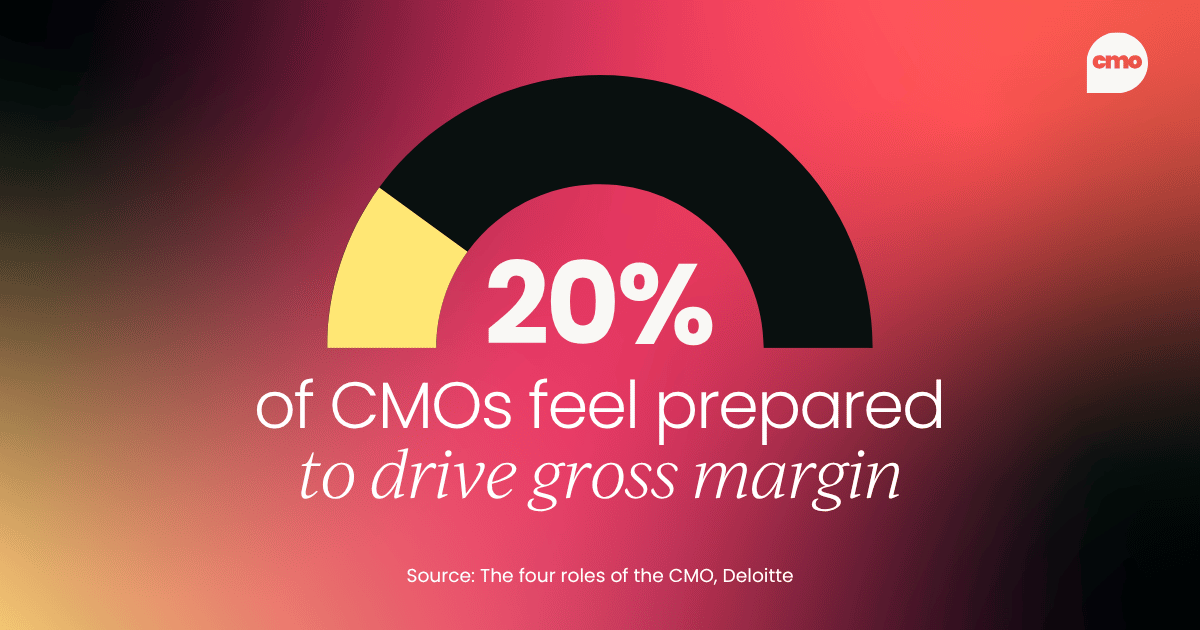
CMOs are usually the largest budget holder in the company, responsible for the customer relationship and driving sales. Yet Deloitte found that only 20% feel prepared to drive gross margin, even though 95% said revenue growth is the organization's top goal.
The gap is an infrastructure problem. Marketing leaders have significant budget to deploy but lack the measurement systems to connect that spending to the profit outcomes their CEOs care about most.
This paradox is at the heart of CMO-CEO misalignment. Marketing leaders have a large budget to spend, but don’t feel empowered to spend that budget in such a way that it aligns with profit goals at the company.
The core obstacle is visibility. CMOs nominally own the customer experience, but that experience is fragmented across CTV, social, search, the web, and hundreds of other touchpoints. Without a unified view of how a strategy performs across all of them, proving cause and effect is nearly impossible.
Until CMOs get past this hurdle, they will be unable to clearly communicate their value to CEOs.
Identify the measurement gap
The first step is to align on the way marketing will be measured. McKinsey finds that CEOs and CMOs do not agree on the right way to measure marketing’s effectiveness. CMOs have many “soft” goals such as driving brand awareness or customer loyalty that may contribute to “hard” goals like revenue. Too often, CMOs are not in a position to prove how their efforts to increase awareness or loyalty translate to revenue.
The issue isn't that CMOs prefer soft metrics; it's that connecting action to outcome has been technically out of reach. CMOs have had to rely on proxies like repeat website visits as indicators of loyalty, rather than measuring actual changes in lifetime customer value. Disconnected systems and fragmented data have made it nearly impossible to draw a clean line from upper-funnel advertising to revenue.
However, it is the CMO’s responsibility to present these challenges clearly to their CEO, and provide an understanding of the challenges and limitations of their current situation. Additionally, CMOs can educate CEOs on how actions such as branding contribute to long-term revenue outcomes with research and third-party validation.
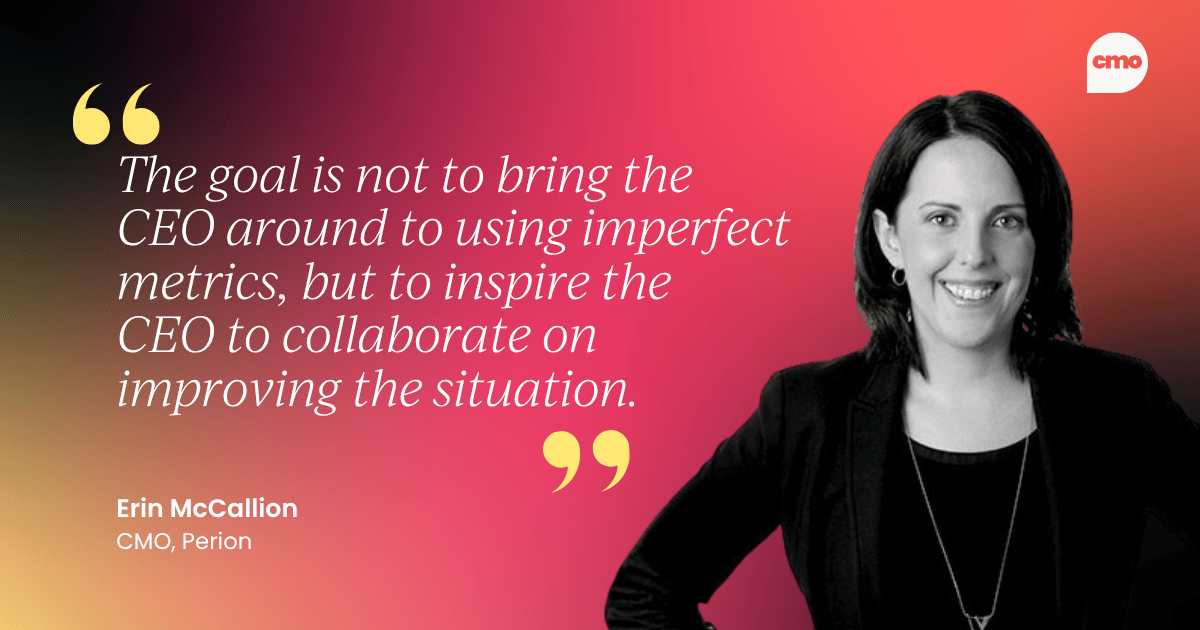
The goal is not to bring the CEO around to using imperfect metrics, but to inspire the CEO to collaborate on improving the situation – connecting systems, investing in new approaches, finding new measurement strategies, etc. This shows the CEO that the CMO is invested in the company’s core goals and wants to prove it.
For example, as the CMO at Perion, one of my core KPIs is marketing-sourced pipeline value. By tracking how our brand awareness and thought leadership campaigns convert into high-value enterprise opportunities, I can tie our marketing spend directly to the company’s larger forward-looking revenue goals.
The role of AI in aligning the CMO and CEO
There is good news for CMOs and their C-suite peers. AI is emerging as a powerful measurement technology that can help connect insights across silos. Marketers can use AI to plan, execute, and measure complex multichannel campaigns more easily and more effectively – and measure the direct effect on revenue.
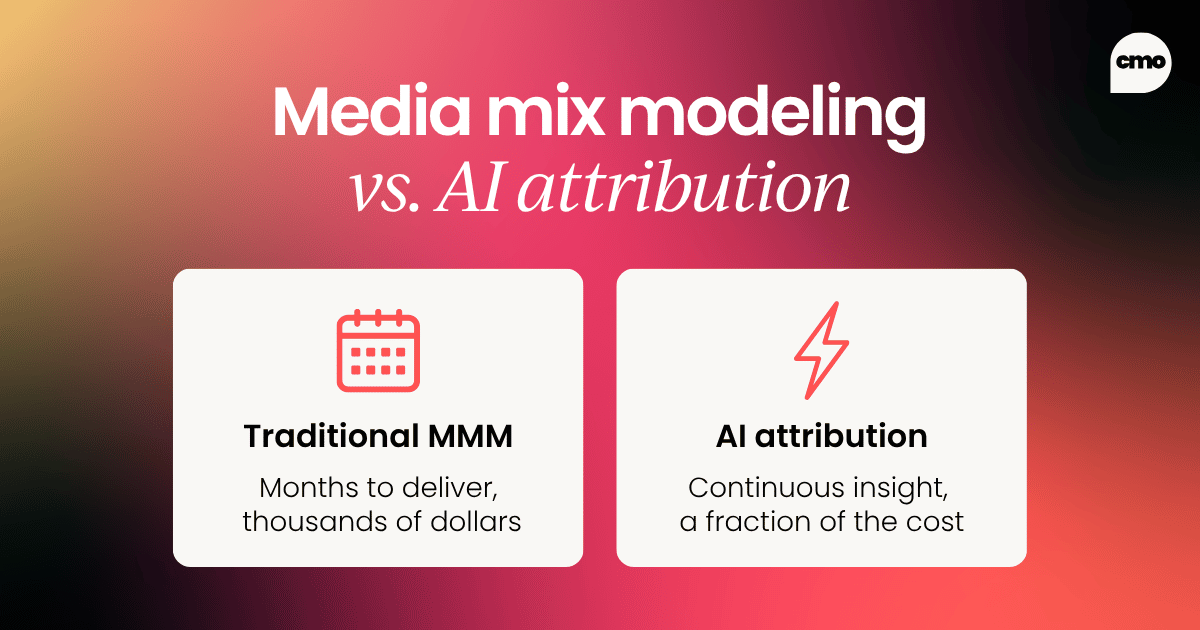
For example, rather than waiting months for a single media mix model to confirm what worked, an AI-powered system can surface cross-channel performance signals continuously, allowing CMOs to adjust mid-campaign rather than mid-quarter.
For our own marketing, I use AI to measure multi-touch attribution across our fragmented B2B journey so that we can see exactly how early-stage brand awareness impacts downstream contract renewals.
Our B2C advertising customers also benefit from AI. I've seen this exact friction play out at a scaling retail brand. The CEO wanted to cut "unprovable" CTV spend to protect margins, while the CMO defended it for brand equity.
By deploying an AI attribution tool to unify their fragmented search and video data, the CMO proved that customers exposed to CTV ads actually yielded a 22% higher average order value. Armed with hard profit metrics instead of soft views, the CMO didn't just save her budget; she and the CEO collaboratively reallocated it to the highest-margin channels.
Simplifying the data behind the insights
AI is capable of understanding imperfect data sets and interpreting signals in different systems into one cohesive insight. This means less heavy lifting from the IT team, who in the past would be responsible for standing up costly projects such as implementing a CDP or integrating systems one by one.
Optimizing campaigns for revenue from the start
With AI, CMOs can also implement marketing campaigns that have the right metrics built in. By sharing revenue-based goals, AI agents can optimize directly towards the right outcomes, without any proxy metrics to get in the way.
We’re starting to do this by feeding historical revenue data into our campaign models, training the AI to dynamically shift budget toward the specific content tracks and platforms that have historically driven the highest closed-won revenue.
Faster, cheaper insights
AI has the additional benefit of being agile and relatively affordable. Traditional multichannel revenue measurement is expensive and complicated. A single media mix model can cost tens of thousands of dollars and take months to deliver results. With AI, rather than performing a single media mix modeling exercise each year, CMOs can get these insights back quickly, and much more affordably. This means CMOs can optimize more quickly and more confidently.
Gaining confidence as a CMO
With the ability to measure the right metrics, CMOs become empowered in new ways. They can increase their budgets, more effectively align with other teams such as merchandising or sales, and they get to know their customers even better.
Marketing today is complex, but that complexity doesn't have to drive a wedge between the CMO and CEO. When both executives share the same measurement framework, powered by AI that connects signals across the full customer journey, they stop debating whether marketing works and start collaborating on how to make it work harder.


Become a CMO Insider
Thank you for subscribing
Get exclusive insights, frameworks, and strategies from marketing leaders driving real business impact.
An email has been successfully sent to confirm your subscription.
 Follow us on LinkedIn