.png)





Brand loyalty isn’t what it used to be.
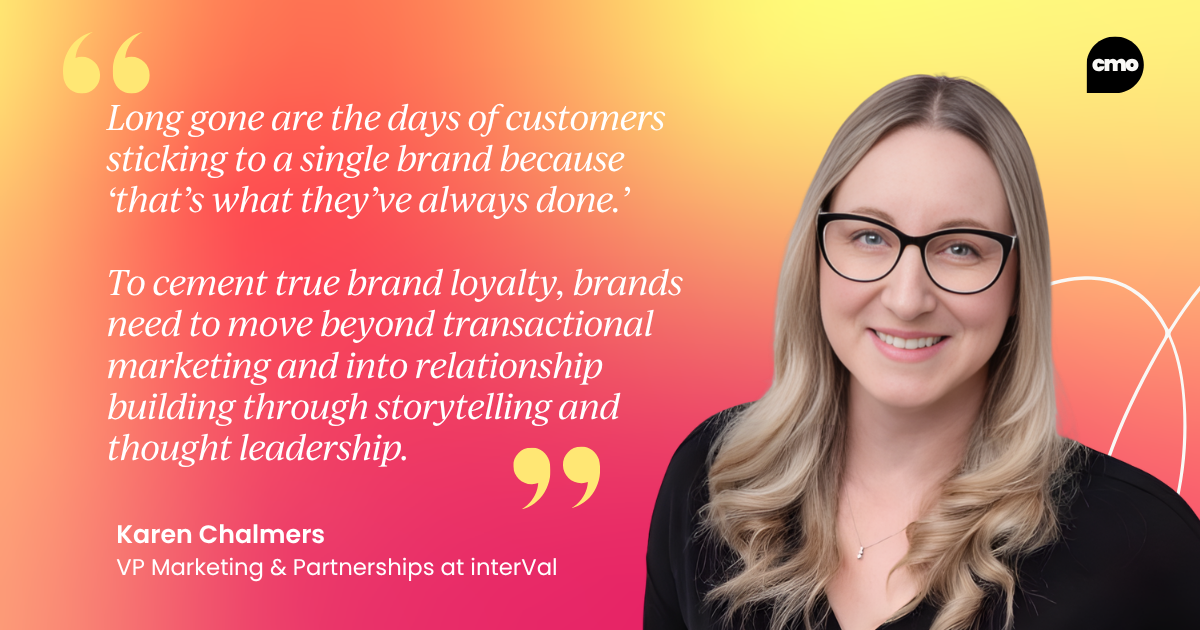
Long gone are the days of customers sticking to a single brand because “that’s what they’ve always done.”
B2C and B2B customer loyalty has waned over the past few decades, and with buyers having more options available to them, they're more apt to jump ship if there are cheaper or faster alternatives available.
We all know price isn’t the only factor, and every industry has lots of bells and whistles to choose from, so how do we as marketers cut through this noise to remain competitive with our existing customers and procure new ones?
To cement true brand loyalty, brands need to move beyond transactional marketing and into relationship building through storytelling and thought leadership.
So let’s dive into how we shift from transactional marketing to authentic storytelling. We’ll look at revitalizing brand loyalty, an actionable roadmap for elevating key voices, operationalizing your strategy, and measuring the real ROI of customer trust.
Why storytelling builds trust and long-term customer loyalty
Human history has always relied on storytelling. It's part of our survival strategy since the dawn of time.
Sharing stories not only helps educate but also builds bonds, and these bonds are becoming increasingly more important in a world where AI has infiltrated every aspect of our lives.
The great thing about marketers is that we thrive on a good story, we understand the buyer's journey, demographic and our ideal customer, so the shift from only transactional to relational is in theory easy.
Transitioning to a relational marketing approach requires a mindset shift that extends beyond the marketing team to the entire revenue motion and executive leadership. Without this collective buy-in, you will face an uphill battle.
The business case for customer loyalty and retention
Thankfully there's some great research to back up your case.
According to Bain & Company a “5% increase in customer retention produces more than a 25% increase in profit.”
Loyalty isn't just a feel-good metric but a massive financial driver for your organization's growth. When you become a trusted resource, you become the natural first call.
As Forbes notes “This approach positions a brand as a reliable source in its field, building trust. Trust, in turn, fosters loyalty, as customers prefer brands that not only understand their challenges but also provide valuable solutions.”
How to build trust through storytelling in marketing
So if trust is the backbone to loyalty, how do we actually build it with our customers?
Your brand cannot simply shout, “trust us” in an ad campaign and expect it to work.
Would you ever believe such a preposterous claim?
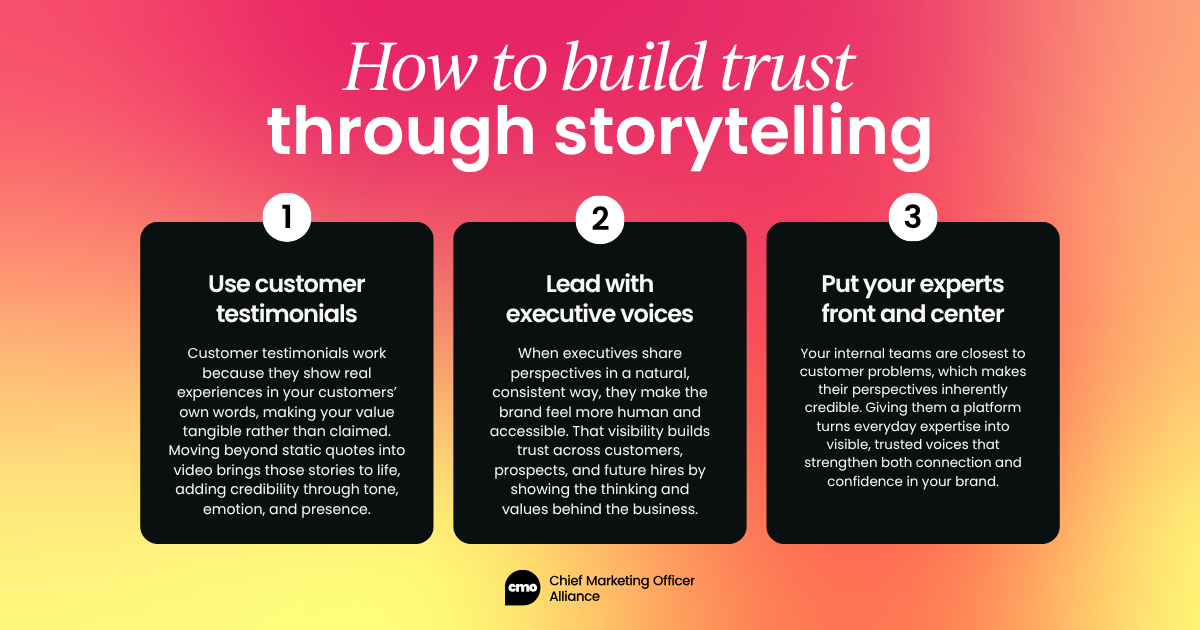
Instead we need to weave together client testimonials, executive thought leadership, and internal brand personalities. This combination sparks deep conversations that can drive real customer retention.
The reason this combination works is because we know that the most compelling corporate stories are at their core human stories.
Use customer testimonials
Now, of course, we’ve all seen the standard client testimonials over the years.
Testimonials have been a long-standing tradition in marketing to tell the story of the client from their perspective. A combination of a headshot and a quote is common, but more and more marketers have moved towards video testimonials to memorialize their clients thoughts and feelings.
As social media algorithms prioritize reels and short-form video content, there is an added value of putting not only a face to the name, but a voice to the experience.
Show up through executive voices your audience recognizes
Executives are also now stepping into the spotlight, creating short thought leadership snippets to share with followers.
The most successful ones tend to be casual in nature, like they’re truly connecting to the person on the other side of the screen. This connection can win over individuals from three different segments: your current customers, your prospects, and potential employees.
If the brand shares the executive’s voice it not only bolsters the executive, but it gives a more human tone to the brand, and therefore creates more trust with the audience.
We’re also seeing them engage in written content, sometimes ghost written but often-times penned by the executive and edited by the marketing team. Particularly if the founder of an organization writes an industry focused piece, they tend to bring it back to the root cause of starting the business in the first place, which is usually a truly compelling story.
Turn internal experts into trusted brand personalities
The area of brand personalities in my opinion is an emerging segment.
We are seeing more “Chief Evangelists” who were formerly industry influencers being hired by companies. But marketing teams can guide their own teammates to build up an influence portfolio of their own.
Every organization has subject matter experts who are likely well esteemed within their industry. We all have customer success or support teams, who see the struggles that your clients face every day. Your sales organizations are having conversations every day in the field, and all of these people are close to our customers' problems.
Putting a face to the people solving those problems builds immediate trust and deepens engagement.
How marketing teams can operationalize storytelling
All three of these personas (the client testimonial, the executive thought leader, and the brand personalities) require guidance from the marketing team to put their best foot forward.
Whether it’s through the confidence of a videography team, who is excellent at asking questions and capturing sincere moments, or a scrappy PR professional, who can provide media training and feedback to your team, this approach is attainable by most marketing teams with any budget.
Sharing these messages does not need to be high cost either. Yes, of course you can boost videos to get more eyeballs on them, but creating your own methods outside of ad and social platforms to share these stories can be rewarding for all involved.
Create impact newsletters for your customers, and share the stories on your website.
Most importantly, ask the humans in the content to share these stories themselves, give them guidelines for copy, teach them how to tag the brand, and make it easy for them.
Everyone can be part of sharing the message and extending the organic reach of the content.
Measure customer trust and loyalty in marketing
You’ve got the strategy and the plan to operationalize it, but one of the main issues with loyalty and retention is metrics.
How does a marketing team shift some of their efforts from transactional marketing to relational marketing while still proving return on investment?
We need a way to measure trust and authentic growth.
Tracking retention, referrals, organic direct traffic, social media follows and customer surveys are some of the ways you can prove the benefits of customer trust and loyalty.
As your executives and brand personalities become trusted authorities, they will often be presented with speaking or media opportunities. As each individual gains attention, it can be yet another measurable impact of the strategy.
The reality is all of these metrics are a byproduct of the hard work of storytelling. Telling a great story allows the speaker to be vulnerable, pushing them to move beyond their professional persona, where they can develop an opinion and speak their mind.
When this happens the viewer or reader can tell they are being genuinely authentic, and humans are naturally drawn to authentic people because they are more likely to be true and honest with us.
To wrap up
Take stock of your team and your clients, discover who already has influence in your industry.
Chat with folks who you find genuine and authentic, find out who is inspired enough to engage with this process (you might be surprised to learn they tell a great story, too).
Those stories will build trust, and trust is where loyalty and the long-term relationship with your client lives.
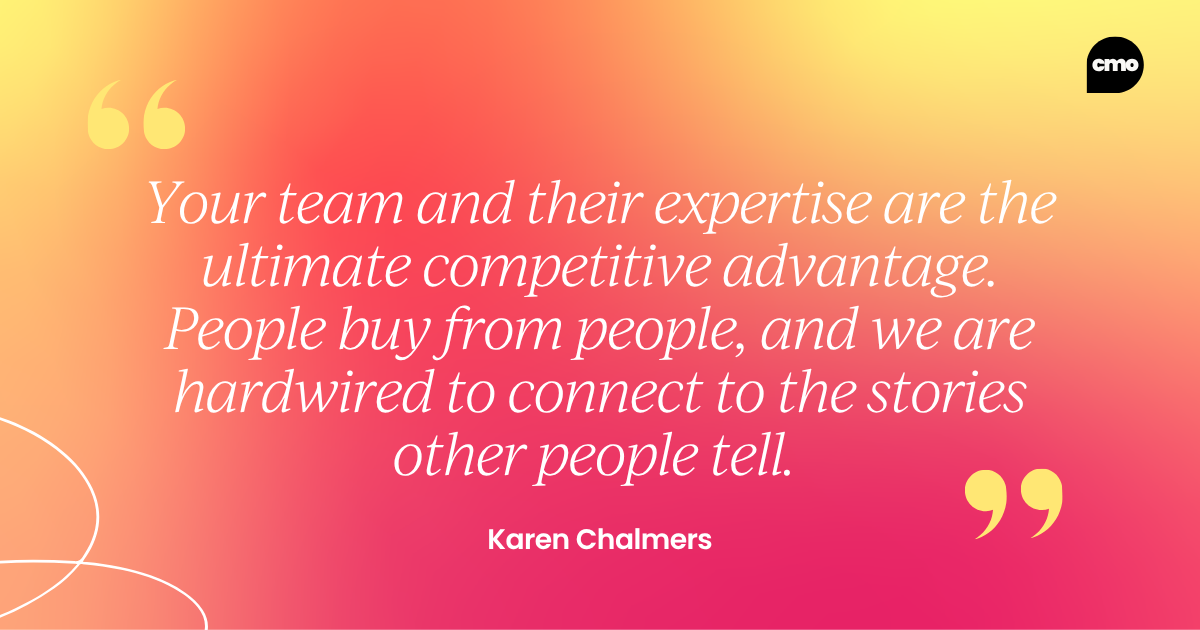
Remember your client is flooded with options to choose from. Your team and their expertise are the ultimate competitive advantage. People buy from people, and we are hardwired to connect to the stories other people tell.
By realigning your efforts to the humans behind the brand, you aren’t just focusing on the next transaction, you’re securing the brand’s future.


Become a CMO Insider
Thank you for subscribing
Get exclusive insights, frameworks, and strategies from marketing leaders driving real business impact.
An email has been successfully sent to confirm your subscription.
 Follow us on LinkedIn