.png)




The era of growth at all costs is ending. You probably already feel it. The pressure to justify every dollar, the shrinking tolerance for vanity metrics, the CFO leaning over your shoulder asking what all of this is actually doing for the business.
What's replacing that old mindset isn't caution, exactly. It's something more useful: resilience.
I've spent the better part of my career sitting at the intersection of brand and performance marketing, at companies like Oura Ring, The Pill Club, and now Ritual. And the thing I keep coming back to, the idea I've had to fight for in boardrooms more times than I can count, is that brand and performance aren't two separate departments; they're a single engine.
When brand and performance marketing run together, they compound. When they're siloed, you're just burning money in two different rooms.
That's the shift I want to help you make: from optimizing channels in isolation to building a media mix that compounds like an investment portfolio. I'll walk you through how I've approached this at brands like Oura Ring and Ritual, and what it takes to get your boardroom on board. Here's what's ahead:
- Why chasing attribution is a losing game
- A better mental model: marketing as capital allocation
- Lessons from building the Oura Ring brand, and what we're testing now at Ritual
- The four moves that build a resilient growth engine
Why attribution hunting is holding you back
Most growth marketers operate like day traders. They're obsessed with the 24-hour fluctuation, the algorithm, the last click. And I get it – that behavior gets rewarded in the short term. You can point to a number, defend your return on ad spend (ROAS), and move on.
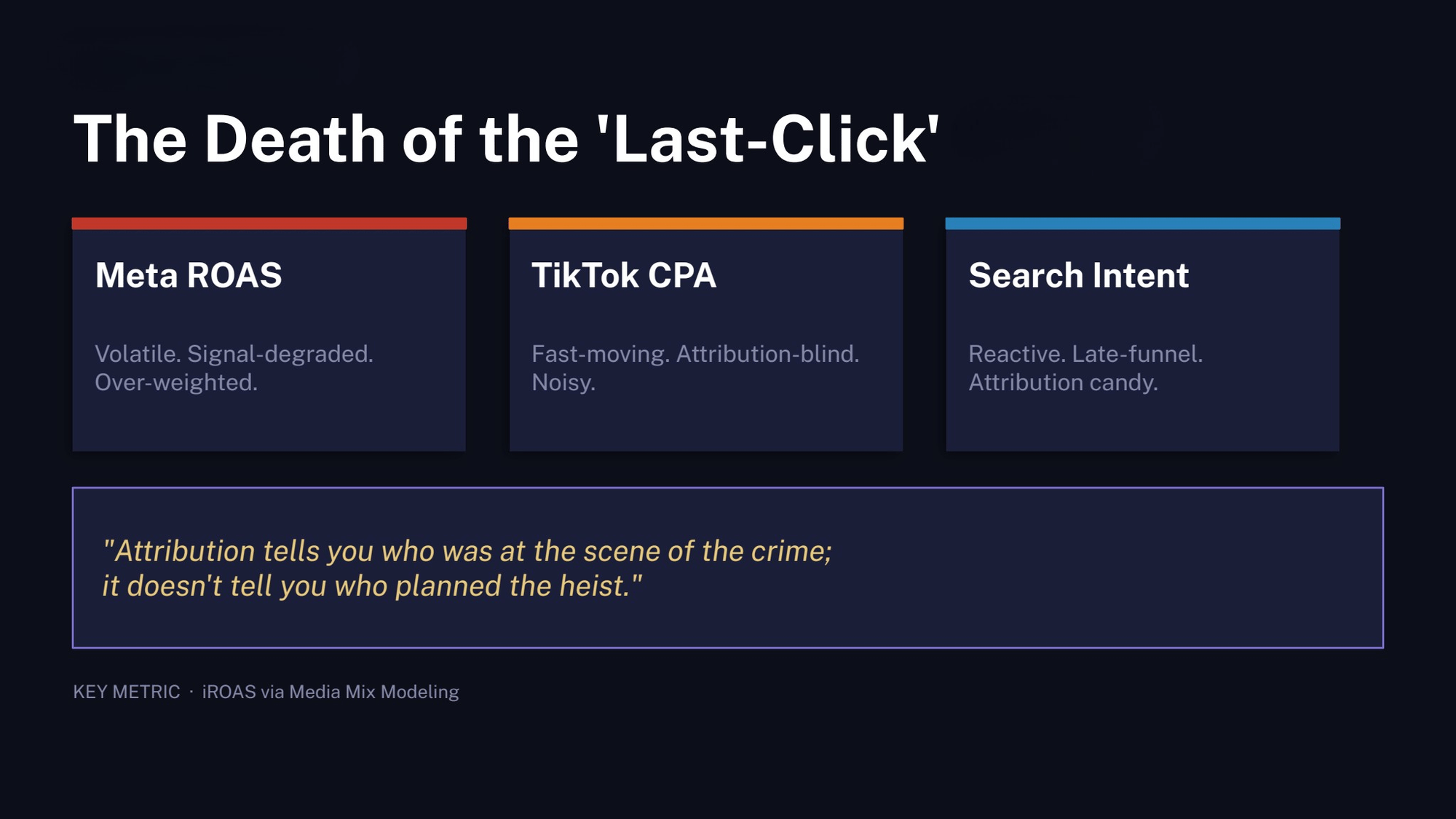
But that approach keeps you stuck in what I'd call attribution hunting, and it's a fundamentally backward-looking activity. Here's how I think about it: attribution tells you who was at the scene of the crime. It doesn't tell you who planned the heist.
Think about the last time you went to see a movie. Did you go because of one ad? One recommendation? One poster you walked past outside the theater? Of course not.
There were probably a dozen touch points across weeks, maybe months, that convinced you to buy a ticket. If the marketer in charge of that campaign gave all the credit to that poster outside the theater, they'd wind up making a pretty poor decision about where to invest next.
Multi-touch attribution is messy. There's no perfect science behind it. And the brands that are winning right now have largely accepted that and moved toward something more integrated. I call it integrated synthesis. The point is that you're trying to understand your entire media mix as one system, not a collection of individual channels competing for credit.
For expert insights like this straight to your inbox twice a month, sign up for Pro+ membership.
You'll also get access to a range of certifications, a complimentary Summit ticket, 50+ tried-and-true templates, members-only workshops, and much more.
So, what are you waiting for?
Marketing as capital allocation
Here's a reframe that's been useful for me, and one that tends to land well when you're talking to a CFO or a board: marketing isn't a cost center to be optimized. It's a capital allocation strategy to be mastered.
When you think about it through that lens, a lot of things start to make more sense. In finance, diversification is often described as the only free lunch you'll ever have. In marketing, it's pretty much the only way you survive.
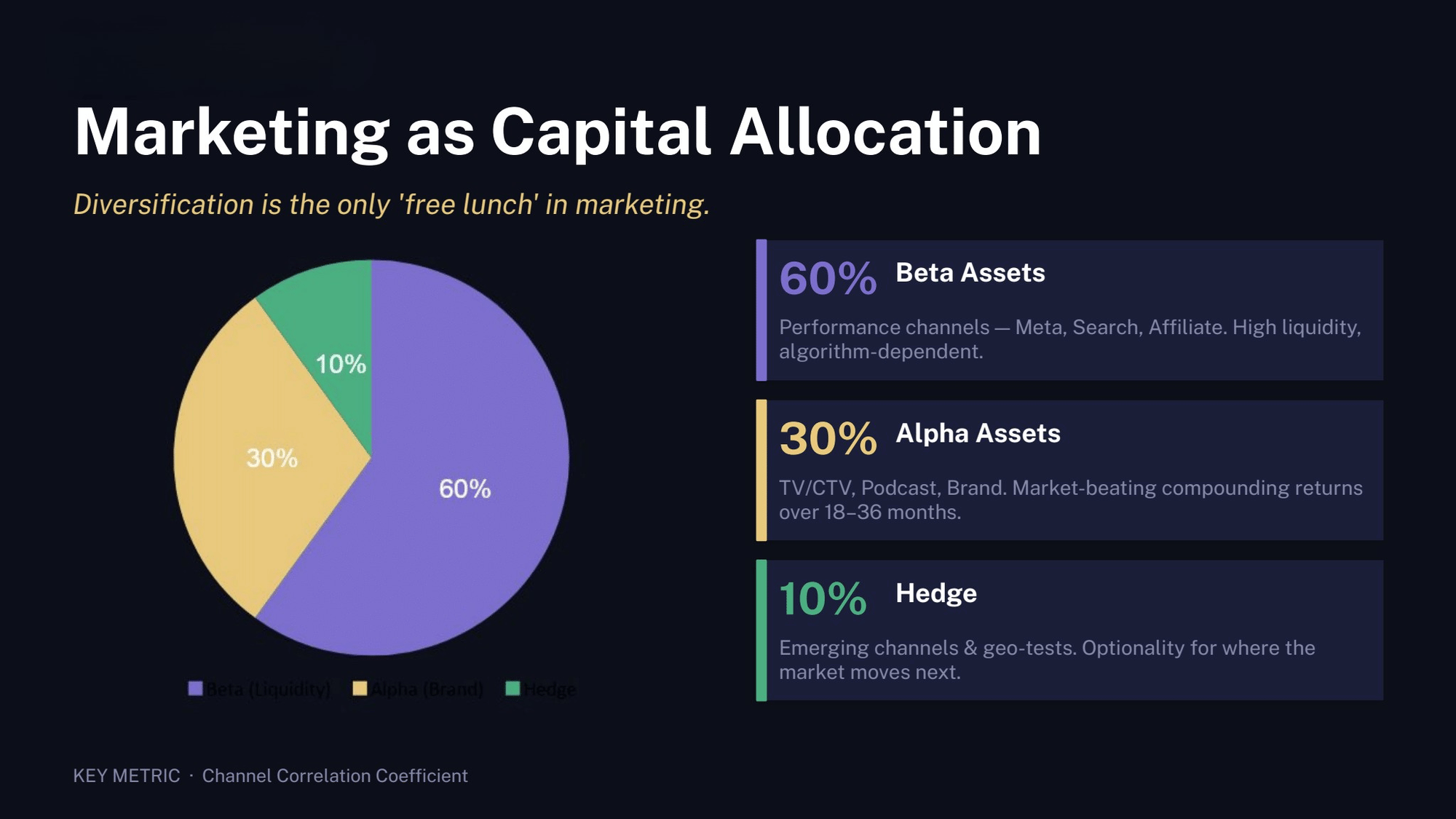
If you think about your overall media mix like a hedge fund, you might put roughly 60% of your investment into high-yield performance channels (your beta strategy), around 30% into brand building (your alpha strategy), and keep about 10% for hedge bets – things like digital reputation management or answer engine optimization, which matters a lot more now than it did even two years ago.
The reason I find this framing helpful is that it forces you to think about balance and compounding gains rather than just short-term yield. A portfolio that's 100% allocated to a single volatile asset isn't a strategy. It's a gamble. And yet a lot of marketing teams are essentially doing that when they pour everything into paid social and hope the algorithm keeps delivering.
The Oura Ring playbook: What compounding brand investment actually looks like
Theory only gets you so far, so let me give you a concrete example.


Become a CMO Insider
Thank you for subscribing
Get exclusive insights, frameworks, and strategies from marketing leaders driving real business impact.
An email has been successfully sent to confirm your subscription.
 Follow us on LinkedIn